


As International Women’s Day (IWD) 2026 passes, it is time for serious recalibration.
In the UK, IWD came amid renewed attention on the horrific abuse of girls by the paedophile Jeffrey Epstein – and others. Yet whether this restores our focus to ending violence against women and girls (VAWG) and winning the worldwide war for women’s rights remains to be seen.
Needed now more than ever
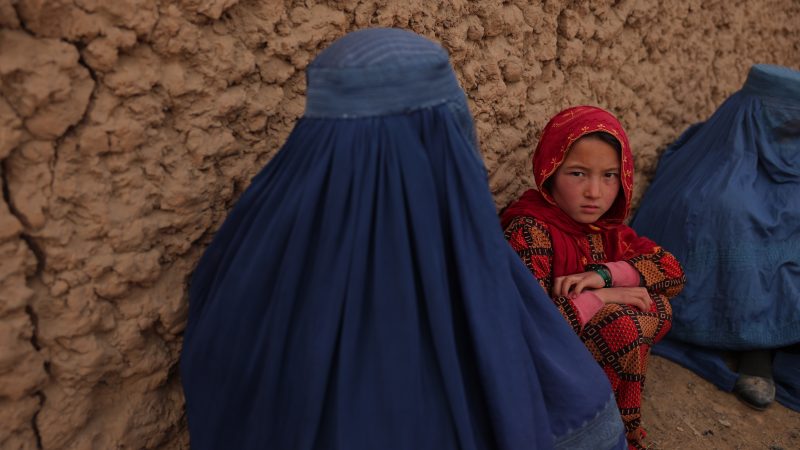
Around the world, women’s rights are being rolled back and hard-won gains are being lost. Nowhere is this more apparent than in Afghanistan. Since the Taliban takeover in 2021, 1.5 million girls have been stripped of their right to attend secondary school, women have had career choices taken away one-by-one and are no longer able to travel without a mahram or male chaperone. How precisely the Taliban exert control over women’s freedoms demands a level of creative cruelty that is unimaginable for many. These include directives which order women not to sing and the removal of windows through which they may be seen.
The situation is only getting worse. The Taliban’s new penal code, published in January, legalises domestic violence, removes any real access to justice and makes it a crime for women to flee to their parents’ house. It creates a theocratic feudalism in which women are at the bottom of the pyramid – on a par with “slaves”.
READ MORE: ‘Ministers have vowed to protect women, but aid cuts will abandon them’
Clauses state that either “slave masters” or husbands are free to issue beatings to their wives or any other subordinates. In fact, they are encouraged to do so especially as a way to issue justice for minor offences. This is not a cultural issue or an unfortunate side effect of conflict – it is a systematic state-led effort to control and abuse half the population. We must recognise this for what this is – apartheid, inflicted upon an entire gender. And yet, as the President of the General Assembly recently said, the international community has failed to protect women’s rights in Afghanistan.
Sadly, Afghanistan is not the only place where life is hell for women and girls.
No words do justice to the horror
Most recently, in Iran, we have seen thousands of people, including many women, killed simply for protesting and wishing for a better future. In Sudan, amid ongoing and brutal conflict, the United Nations estimated that 12.1 million women and girls were at risk of sexual violence. It followed reports of children as young as five being raped.
Subscribe here to our daily newsletter roundup of Labour news, analysis and comment– and follow us on TikTok, Bluesky, WhatsApp, X and Facebook.
In the Democratic Republic of Congo, when conflict has been most intense, the United Nations estimates that a child has been raped every 30 minutes, with adolescent girls accounting for the largest and fastest-growing share of reported cases.
There are no words that do justice to the horror behind these statistics. But we must not turn away from them.
Britain’s credibility on women’s rights abroad depends on innovative policy and a principled-driven approach that unites both domestic and foreign policy. There is much to be proud of. Domestically, this government has set the most ambitious targets ever to halve violence against women and girls in the UK over the next decade. Internationally, our Foreign Secretary Yvette Cooper has launched the ‘All In Coalition to End Violence Against Women’, which is specifically focusing on tackling the use of rape as weapon of war, sharing best practice across nations and responding to new digital threats which are shared across the globe. We will be represented on the panel by Baroness Harriet Harman whose appointment as the UK’s Special Envoy for Women and Girls I particularly welcome.
There is much we can and must do
Funding for women-led organisations must be protected, tackling violence against women and girls must remain central to both foreign and defence policy, and women must be fully embedded in peacebuilding and conflict resolution, reflecting our commitments under UN Resolution 1325. We must ensure aid cuts never disproportionately affect gender equality programmes. Finally, and crucially, we must recognise gender apartheid for the crime against humanity that it is.
There are two immediate opportunities the UK has to show our leadership. In December 2024, UN member states agreed in General Assembly Resolution 79/122 to advance an international treaty to prevent and punish crimes against humanity. Until April 30, states can support proposals for amendments which include gender apartheid. This is a diplomatic window that cannot be missed. Indeed, I have raised this in the House and written to the Foreign Secretary urging her to join other countries which have already taken this step.
The second comes at the global policy level. This month’s upcoming session of the United Nations Commission on the Status of Women – the UN body exclusively dedicated to the promotion of gender equality – could be a moment to move from declarations to enforceable commitments. Symbolic statements from the international community will not prevent the global rollback of women’s rights: action must follow. Recognition of gender apartheid, sustained funding for women-led organisations, and embedding women in peacebuilding are steps that the UK can take immediately.
We must fight for them
Meanwhile, in Afghanistan women continue to resist at enormous personal risk. They teach girls in secret, protest in silence, and document abuses for the world to see. Women in Sudan and the DRC organise amid ongoing violence. They are not passive victims, they are fighting.
We must fight for them too, not only because this is the right thing to do but because it is in our interests too. When women’s rights are rolled back anywhere, they are rolled back everywhere. When high-profile abuse scandals dominate conversation at home, we must recognise the global epidemic in which they sit. Tackling violence against women and girls cannot be achieved without defending women’s rights and issuing the most robust response when they are violated.
Share your thoughts. Contribute on this story or tell your own by writing to our Editor. The best letters every week will be published on the site. Find out how to get your letter published.
The UK has shown that it is willing and capable of taking a leadership role to coordinate the global fightback. So, in the week of this International Women’s Day, let our message to women and girls be worldwide and clear: Britain does not stand idly by.
-
- SHARE: If you have anything to share that we should be looking into or publishing about this story – or any other topic involving Labour– contact us (strictly anonymously if you wish) at [email protected].
- SUBSCRIBE: Sign up to LabourList’s morning email here for the best briefing on everything Labour, every weekday morning.
- DONATE: If you value our work, please chip in a few pounds a week and become one of our supporters, helping sustain and expand our coverage.
- PARTNER: If you or your organisation might be interested in partnering with us on sponsored events or projects, email [email protected].
- ADVERTISE: If your organisation would like to advertise or run sponsored pieces on LabourList‘s daily newsletter or website, contact our exclusive ad partners Total Politics at [email protected].



More from LabourList
‘Labour must prove it understands public anger over water company failure – and act on it’
‘Education, education, education – not debt, debt, debt’
‘Be real Labour’: Unite cuts Labour affiliation fee by 40% and hits out at government