

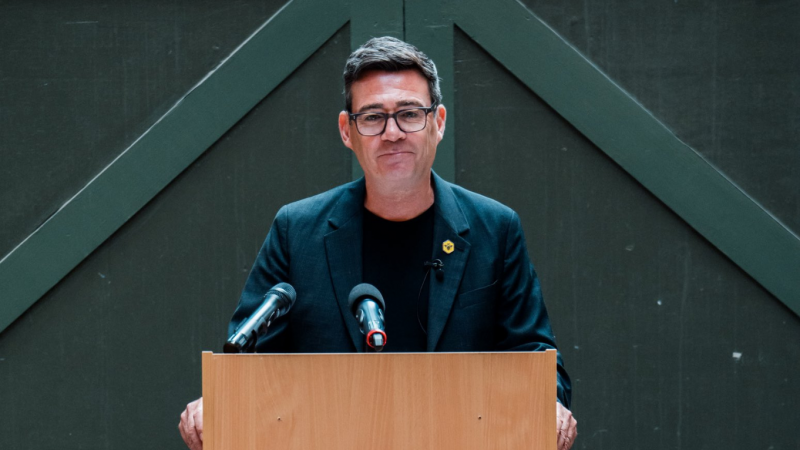

I have long been an advocate of devolution. We are one of the most centralised countries in the developed world, with far too many decisions made far too far away from the communities they affect. This has slowed growth and meant that far too many opportunities are clustered in London and the South East. This disconnect between decision-makers and the rest of us is a core part of the pervasive sense that politics doesn’t work for the vast majority. It is this widening gap that allows for an increase in the easy snake oil answers peddled by the populists.
One key thing I always try to do when I take a position – particularly as strongly as I do on devolution – is to really try to understand what the arguments of my opponents are. What are their concerns? What are the trade-offs? All too often, on a range of issues, once we take a position we refuse to engage with any concerns about it. But I firmly believe this makes us less able to answer these questions rather than better able to press our case.
So why has it been so hard to give away power?
READ MORE: ‘Is fiscal devolution is the missing piece of Manchesterism?’
Of course, Labour did devolve power to Scotland and Wales during the New Labour years. And while, until recently, we remained in power in the Senedd we lost it in Scotland. So let us be honest about the raw politics of devolution – sometimes it means empowering other parties.
That’s not nothing. We get involved in politics because we believe our party has the right ideas to improve lives and do not want to see our opponents enacting policies we feel would be damaging to the people we care about. The paternalist instinct is strong in Labour and, when combined with our belief in a strong and active state, has long meant that keeping power at the centre has led to a belief that we are better able to enact change when we do come to power.
But ultimately, that central power is not as good at delivering that change as localities are. Centralised power is too ‘one size fits all’; local power can be better wielded to suit the local needs of very different communities. Mayors are better placed to invest in their own economies to ensure that they can grow and are better able to invest in what is needed for their communities to continue to thrive.
And if you want a purely political argument, Labour, sadly, are not always in government nationally. Devolving power gives us a chance to continue to protect and support communities when the right are in power at Westminster.
The political media will also struggle to understand how to cover such a dispersal of power. Because, done right, it will mean that politicians from the same party might take significantly divergent paths even if they have shared goals. We can look forward (sadly) to endless breathless reporting of ‘rows’ and ‘splits’ as different Labour politicians make different decisions that work for their differing areas.
This is as inevitable as it is annoying. What it is not is a reason not to devolve. We are going to have to learn to differ agreeably. If, as Andy Burnham has called for, we are going to change the culture of politics, some of that culture change will be Burnham’s government being confidently relaxed about some Labour mayors doing things he would not.
Become a friend of LabourList and join our community. Our friends support our vital non-factional work and get access to exclusive content and events.
As my brilliant colleague Daniel Green has outlined, there are real concerns when we talk about the ‘north/south divide’ that we don’t see the reality of the poverty and deprivation that exist within areas that are widely considered to be wealthy. That for some to win others must lose – and be seen to lose. And that those losers won’t be the rich, but the poor living in areas where their neighbours may prosper but who do not share in that prosperity.
This is a very real concern, very sincerely felt by many. Labour winning seats across the south in 2024 has meant that MPs there have voiced concerns that the places they represent will lose out if investment is rebalanced.
In making this argument, Burnham will need to be absolutely clear that devolution works not just for traditionally overlooked areas in the north but for all of us. That the mayor of West Yorkshire having the control over spending to build the much-needed Leeds tram does not stop there being very real and much-needed investment made by the Mayor of the West of England or decisions that are right for Sussex being made by their county council.
The shape of devolution will be important. How it works for areas that are not as well organised spatial economies as Greater Manchester will need to be spelled out, understood and planned for. I hope that in his eagerness to speak to the ‘Makerfield test’, Burnham is also able to set out the positive case for Marlow, Harlow and Hounslow.
Subscribe here to our daily newsletter roundup of Labour news, analysis and comment– and follow us on TikTok, Bluesky, WhatsApp, X and Facebook. You can also write to our editor to share your thoughts on our stories and share your own. The best letters are published every Sunday.
The final argument I want to address is the sense that spending has to be controlled by the Treasury at the centre in order to ensure it is well managed. You will still hear this in pockets of SW1. On this I have one answer made up of just two letters and a number: HS2.
Devolution is long overdue. Too often talked of, too rarely properly undertaken. Can that change now?
-
- SHARE: If you have anything to share that we should be looking into or publishing about this story – or any other topic involving Labour– contact us (strictly anonymously if you wish) at [email protected].
- SUBSCRIBE: Sign up to LabourList’s morning email here for the best briefing on everything Labour, every weekday morning.
- BECOME A FRIEND: If you enjoyed this, why not consider becoming a Friend of LabourList? Help sustain our journalism, and of course Friends do get benefits…
- PARTNER: If you or your organisation might be interested in partnering with us on sponsored events or projects, email [email protected].
- ADVERTISE: If your organisation would like to advertise or run sponsored pieces on LabourList‘s daily newsletter or website, contact our exclusive ad partners Total Politics at [email protected].



More from LabourList
‘Back Burnham over Brexit’
Delivering in local government: How Labour is building a better Britain everywhere
‘Changing our voting system is fundamental to Burnham’s agenda’