

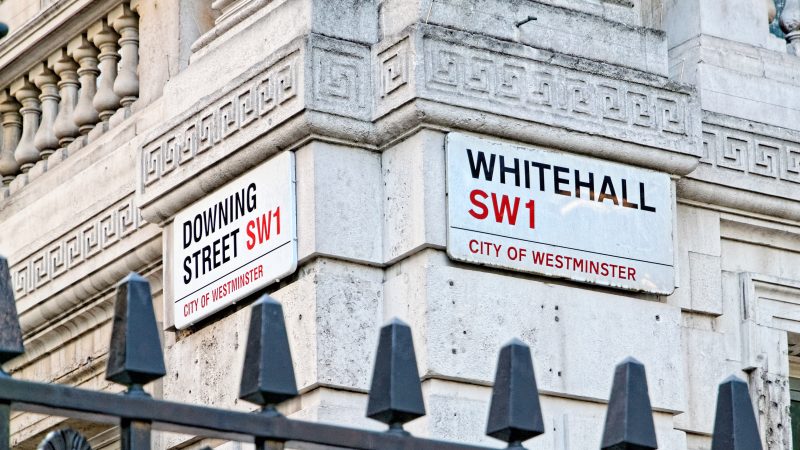

I joined the civil service in 2014, went on a career break in 2023, and resigned last year. In nine years, I served five Prime Ministers mainly, though not entirely, from the vantage point of the Cabinet Office, with a brief spell in Downing Street, and from within the private offices of four different departments.
It looks likely that someone in the Labour Party will challenge Sir Keir Starmer’s leadership in the coming weeks. I make no assumptions about whether that challenge will be successful but, if it is, the Labour Party is about to attempt the most difficult manoeuvre in government – that of changing leader mid-term. Having witnessed closely the formation and collapse of several mid-term governments – including the Truss government which buckled within weeks – here are the things I have learned and which I hope everybody with ambition to be leading our country six months from now (including the current Prime Minister) will bear in mind.
First, you must have three fundamental things in place before becoming Prime Minister: personnel; policies; and plans for executing your policies. You cannot synthesise these once in post – events will devour you whole. Campaigning to win (or fend off) a leadership contest will consume almost all your energies until the contest ends, leaving you with almost no time for these three fundamentals. It is essential that you create a separate group, insulated from campaign pressures and the relentless appetites of the media, the sole function of which is to prepare for government. This group must be headed, or at least supervised, by a highly trusted political aide.
READ MORE: ‘Labour must learn the right lessons from the Milburn Review’
Second, you are never more powerful as Prime Minister than during the first twenty-four hours after appointment. Civil servants will accommodate almost any decision you make on your first day (this deference will evaporate quickly). From my outsider’s vantage point, it is abundantly clear that the advisory system surrounding the current Prime Minister has all but broken down. Any leadership hopeful who feels they can simply preside over this same system and expect different results is highly likely to find themselves, within months, in the same position as Sir Keir is now. A significant restructure of the central machinery of government should be the first order of business of the Prime Minister.
Third, personnel is policy. In my experience, the single best predictor of Prime Ministerial success is the calibre of their closest advisers. A Prime Minister will spend more time speaking to these advisers than their own spouse. When considering who to appoint, a prospective PM needs the self-awareness to honestly recognise their own strengths and weaknesses, and to appoint advisers who can compensate for those weaknesses. The temptation is always to appoint advisers who reinforce existing strengths and prior beliefs, which is a mistake. All leadership candidates should be making their key personnel decisions now. Ideally, as in the United States, they should choose a Director of Appointments whose sole responsibility is to source talent below the level of the Chief of Staff. All political appointments involve striking a compromise between two necessary qualities: competence, and ideological alignment. Leadership candidates should carefully consider how much competence they are prepared to forego in a candidate who is highly ideologically aligned, and vice versa (this also applies to cabinet appointments). Blair, Brown, Cameron, Johnson, and Starmer have all drawn Chiefs of Staff from the civil service, sometimes successfully and sometimes not. A Chief of Staff must understand how you think, be unquestioningly loyal, and be prepared to deliver difficult truths. The gravest mistake is to expect them to devise your policy agenda – that is not their function.
Become a friend of LabourList and join our community. Our friends support our vital non-factional work and get access to exclusive content and events.
Fourth, whilst government is a highly complex machine, there are only ever two types of decision: those taken by individual ministers, and those taken by cabinet and its committees. Each leadership candidate must ask themselves: do I enjoy taking decisions alone or with advisers to hand? Do I prefer to be advised orally or in writing? Do I enjoy chairing committees? Both the cabinet committee system and the No 10 briefing machine are within the gift of the Prime Minister to reshape as they see fit. If you do not enjoy chairing committees then you should delegate the bulk of that responsibility to a trusted cabinet minister who is skilled in doing so. Boris Johnson delegated almost all operational decision making on Brexit to a cabinet committee chaired by Michael Gove. If you don’t relish the thought of sitting alone at night with a red box full of papers requiring a response, then structure your working day so that there is always time set aside for decisions.
Fifth, there are only three approaches you can realistically take toward the civil service: confront it; co-opt it; or sideline it. Confrontation is costly and only worth embarking upon if you have a very clear idea of what your strategic goals are. Sidelining can lead to quicker decisions but also greatly raises the probability of making serious errors. Co-opting has obvious advantages but, beware, that however much you cooperate with and trust the civil service, some officials will not be able to resist the temptation to use their positions to interfere with policies, programmes, appointments, or public expenditure decisions with which they do not agree. Sadly, this will happen a lot. Almost all my time in a private office was spent on the receiving end of devious behaviour by senior civil servants.
Finally, political leadership consists of ministers making dozens of decisions per day, each of which involve a compromise between cost, operational feasibility, and electoral desirability. The role of the Prime Minister is to try and strike the best compromise, as often as possible. Accept that you are going to make mistakes, even if everybody (including you) does their job properly. The goal should be for the mistakes not to define your tenure.
The exercise of high political office is the most difficult job imaginable. The flow of work is ceaseless. If you are efficient, more papers and decisions will emerge to fill your time. I once took an evening off for a friend’s birthday only to receive, once I had several glasses of wine in me, an urgent phone call from a distressed civil servant saying that nobody could find my minister and if we did not locate him before midnight, two billion pounds would be wasted. Political leadership is stressful beyond measure, but it is, without exception, some of the most rewarding work one can devote a life to.
Subscribe here to our daily newsletter roundup of Labour news, analysis and comment– and follow us on TikTok, Bluesky, WhatsApp, X and Facebook. You can also write to our editor to share your thoughts on our stories and share your own. The best letters are published every Sunday.
In the depths of Covid in 2020, I and a few other civil servants would find ‘feel good’ decisions that, though they didn’t technically need the Prime Minister’s approval, we would send to him anyway if only to try and remind him that he was doing some good among the endless flow of impossible dilemmas 2020 presented him with.
This would be my last piece of advice for whoever our Prime Minister is by the end of 2026: remember, amidst the scrutiny of the press and the remorseless demands of accountability, that you can improve millions of lives on a daily basis in a way that no other professional calling can match. That is the true privilege of public service.
-
- SHARE: If you have anything to share that we should be looking into or publishing about this story – or any other topic involving Labour– contact us (strictly anonymously if you wish) at [email protected].
- SUBSCRIBE: Sign up to LabourList’s morning email here for the best briefing on everything Labour, every weekday morning.
- BECOME A FRIEND: If you enjoyed this, why not consider becoming a Friend of LabourList? Help sustain our journalism, and of course Friends do get benefits…
- PARTNER: If you or your organisation might be interested in partnering with us on sponsored events or projects, email [email protected].
- ADVERTISE: If your organisation would like to advertise or run sponsored pieces on LabourList‘s daily newsletter or website, contact our exclusive ad partners Total Politics at [email protected].



More from LabourList
‘From solidarity to accountability: why Labour must stand up for Hong Kong’
‘Why ‘Hugh’s Law’ should be the next step for working families’
Good growth in every postcode 14th October 2026