

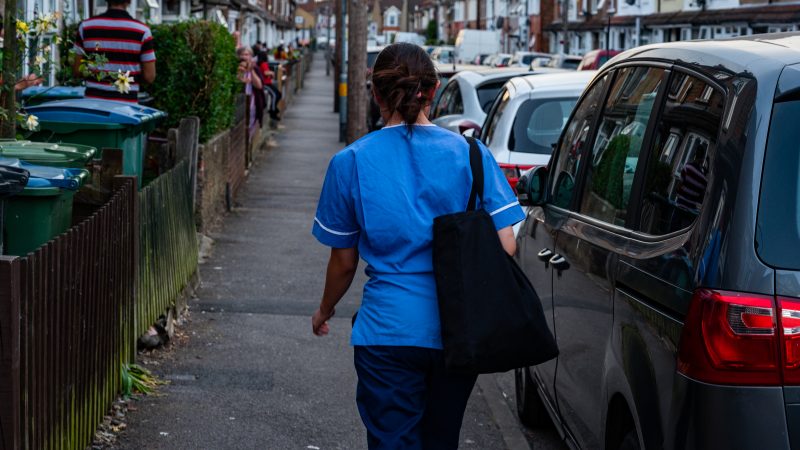

There is one detail from the Belfast riots that has stayed with me. The two women trapped in their home while a mob raged outside were care workers. This tells us something uncomfortable about the country we are becoming.
Sumayah Nakazibwe and Stella Ariokot were living in the UK where they were looking after people. All over this country, there will be families grateful that women like them help an older parent or a disabled sibling wash, dress, eat, take medication, get safely through the day, or simply hear a kind voice at the door. In another conversation, they might be described as “immigrants”. In real life, they are care workers, neighbours, colleagues and members of a community.
We talk about immigration as though it were an abstract maths exercise (up here, down there, too many, too few). But social care doesn’t have time for that – because it deals in homes, meals, and medication; it addresses loneliness, fear, and frailty and ensures dignity. It deals in the ordinary and intimate facts of human dependence.
The UK didn’t recruit migrant care workers by accident. We asked people to come because social care needed them. There are still well over 100,000 vacancies in adult social care in England. Providers struggle to recruit enough staff – care work is demanding and skilled, but it remains too low-paid and too often invisible.
So people came, often leaving homes and families, to take jobs that many people born here do not want to do for whatever reason. That they care for our loved ones creates a moral obligation: we can’t invite people to Britain to do essential work, change the rules once they have built their lives around that invitation, and then be surprised when they feel discarded and decide to leave. We cannot rely on migrant workers to keep social care running while allowing them to feel unsafe in the streets and neighbourhoods where they work.
The Belfast riots may be extreme, but it’s not as if it’s been the only warning sign. Social care providers have been reporting rising hostility towards staff. Some care workers have been verbally abused or attacked while travelling between people’s homes. Others worry about visible signs of faith or identity. Providers serving minority communities are having to think about alarms and emergency plans. This is not how a decent country treats people who spend their working lives looking after others.
And the consequences won’t fall just on the workforce. If migrant care workers decide the UK is not safe or welcoming enough to stay, we all suffer. Care homes will be short staffed, supported living services will become less safe, and home care visits will be rushed at best or missed at worst. So families will be asked to do more, and we all know what that means: people (most often, women) reducing their hours, leaving jobs, damaging their health and trying to hold together arrangements that were never sustainable. When formal care fails, unpaid carers absorb the collapse, too often at a personal cost.
Become a friend of LabourList and join our community. Our friends support our vital non-factional work and get access to exclusive content and events.
This is the part of the immigration debate that is still not taken seriously enough. It is easy to demand lower numbers. It is harder to answer the next question: who will help provide the care? Any politician who argues for fewer migrant workers must explain how social care will be staffed instead. If the answer is that care work should be better paid and properly valued, I completely agree. But then say how it will be funded and how quickly it can happen; say who will look after people tomorrow morning, when the care worker does not arrive.
Because there is no honest version of this debate that treats migrant care workers as a problem to be removed while relying on them as a workforce to be retained. We can’t have it both ways.
None of this means social care should remain dependent on low-paid international labour – it absolutely should not. We need fair pay, better conditions, training, progression and respect for the whole care workforce, regardless of where people were born. But until we build that system, we should at least have the decency to value the people holding the current one together.
All of us will need social care one day. If not for ourselves, then for someone we love. When that moment comes, we won’t want slogans. We’ll want a skilled, patient, kind person at the door. If we drive those people away, all of us will pay the price.
Subscribe here to our daily newsletter roundup of Labour news, analysis and comment– and follow us on TikTok, Bluesky, WhatsApp, X and Facebook. You can also write to our editor to share your thoughts on our stories and share your own. The best letters are published every Sunday.
-
- SHARE: If you have anything to share that we should be looking into or publishing about this story – or any other topic involving Labour– contact us (strictly anonymously if you wish) at [email protected].
- SUBSCRIBE: Sign up to LabourList’s morning email here for the best briefing on everything Labour, every weekday morning.
- BECOME A FRIEND: If you enjoyed this, why not consider becoming a Friend of LabourList? Help sustain our journalism, and of course Friends do get benefits…
- PARTNER: If you or your organisation might be interested in partnering with us on sponsored events or projects, email [email protected].
- ADVERTISE: If your organisation would like to advertise or run sponsored pieces on LabourList‘s daily newsletter or website, contact our exclusive ad partners Total Politics at [email protected].



More from LabourList
‘How Burnham’s government can overcome barriers to taxing wealth’
‘Our regional theatres are engines of growth. Labour should help them thrive’
The art of the political apology