

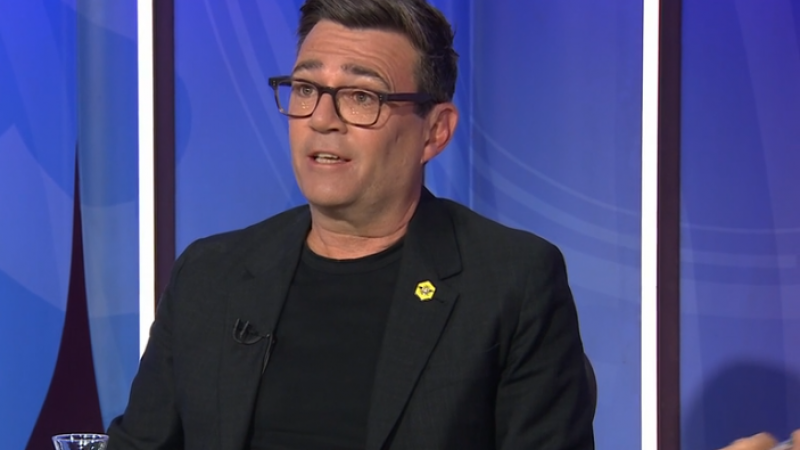

It may have come as no surprise (especially to us at LabourList), but Andy Burnham was on top form speaking to voters in Makerfield on Question Time last night; championing his record in Greater Manchester, appealing for cohesion in the face of division and offering his vision for a better tomorrow.
Also unsurprising, given the context in which the by-election is being held, Burnham confirmed the worst-kept secret in British politics – that he would enter any leadership contest to challenge Keir Starmer for the keys to Number 10. If our polling is to be believed, such a contest would be his to lose.
Other than Burnham and his ease of connecting with the working people of the audience, the thing that struck me most was the pitiful performance of the two populist parties that try to talk Labour down at every opportunity.
Reform’s Robert Kenyon failed to offer a convincing apology for the abhorrent views he has expressed in the past, and his comment that their plan to hire 30,000 more police would be “a problem for whoever is recruiting them” was laughable.
Meanwhile, the Green Party’s back-up candidate in Sarah Wakefield was all at sea when challenged about the housing crisis in relation to immigration. Is this really the party that can take on Nigel Farage?
The debate was a reminder of what a talent Burnham is – and why (regardless of whether you think he should be leader or not) we need him back in the House of Commons. In a rare bit of good polling news, and without taking anything for granted, Labour seems to have momentum in Makerfield – with a new Survation poll giving Burnham a ten-point lead over Reform. This is our chance to fight back against the forces of populism and show Labour is still on the pitch.
It is this glimmer of hope that makes reports of some Labour MPs dragging their feet on campaigning so frustrating. Concerns about what a Burnham victory might mean for the party’s internal politics are understandable, but surely they pale in comparison to the prospect of another Reform by-election win in Labour’s heartland. What message would it send to hand Nigel Farage a victory as he turns a blind eye to violence against police officers and seeks to inflame divisions in our communities?
Factional battles will no doubt erupt once the result is known. But before then, Labour should recognise the opportunity before us. Makerfield offers a rare chance to put the party back on the front foot after a bruising set of local and devolved election results and to show voters that Labour is still capable of taking the fight to Reform. At a moment like this, the party’s energies should be focused on winning the by-election, not on already fighting the next internal battle.
Become a friend of LabourList and join our community. Our friends support our vital non-factional work and get access to exclusive content and events.
Subscribe here to our daily newsletter roundup of Labour news, analysis and comment– and follow us on TikTok, Bluesky, WhatsApp, X and Facebook. You can also write to our editor to share your thoughts on our stories and share your own. The best letters are published every Sunday.
-
- SHARE: If you have anything to share that we should be looking into or publishing about this story – or any other topic involving Labour– contact us (strictly anonymously if you wish) at [email protected].
- SUBSCRIBE: Sign up to LabourList’s morning email here for the best briefing on everything Labour, every weekday morning.
- BECOME A FRIEND: If you enjoyed this, why not consider becoming a Friend of LabourList? Help sustain our journalism, and of course Friends do get benefits…
- PARTNER: If you or your organisation might be interested in partnering with us on sponsored events or projects, email [email protected].
- ADVERTISE: If your organisation would like to advertise or run sponsored pieces on LabourList‘s daily newsletter or website, contact our exclusive ad partners Total Politics at [email protected].



More from LabourList
Labour triumphs against Polanski, but the Green threat remains
Delivering in Government: your weekly round up of good news Labour stories
Labour members willing to accept Green defections, but not Tories or Reform – poll