

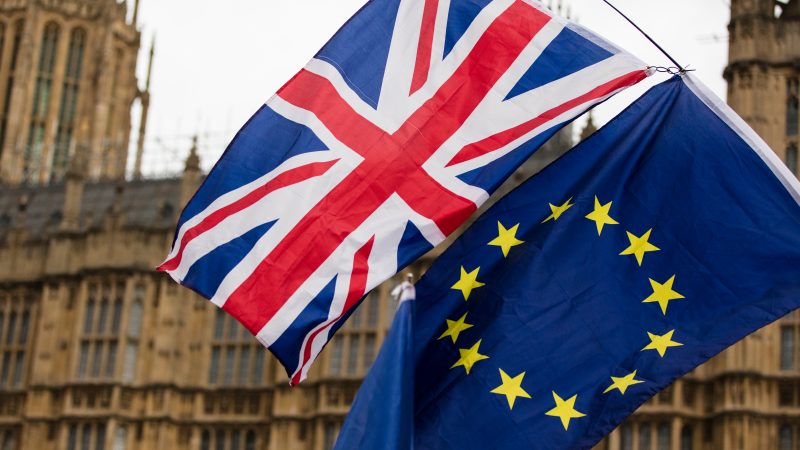

Labour politicians are increasingly pushing stronger lines on Europe.
While the Prime Minister has focused on rebuilding relations with Europe and securing practical gains through closer alignment and agreements, potential leadership contenders such as Wes Streeting have floated going further, including the possibility of Britain eventually rejoining the European Union.
And when you look at the polling, you can really understand why. A party polling at its current level is naturally going to have politicians trying to give their voters more of what they want.
But if Labour wants to push further than a reset – whether that be a customs union, or the full-fat option of going back into the EU, as Wes Streeting has suggested – then the party should be careful how it treads.
READ MORE: ‘Spend big! The public might not be as opposed as you think’
For many years we have tracked public preferences on Britain’s relationship with the EU. While views can be complicated, the broad picture is relatively clear: left-of-centre voters, with Labour voters being the largest group among them, are generally very positive about closer ties with Europe.
Among current Labour voters, just over half (53%) would, as their preferred outcome, like the UK to rejoin the European Union. A further quarter, 24%, would prefer to remain outside the EU but negotiate a closer relationship than we currently have. Taken together, that means 77% of Labour voters want Britain moving closer to the European Union in some form, whether from outside it or from within it.
That instinct among Labour politicians – that talking positively about Europe and seeking a closer relationship is relatively safe territory – appears to be borne out by the polling.
The same is true among voters Labour may hope to attract. Four in five (79%) of both Liberal Democrat and Green voters also favour either rejoining the EU or moving closer to it even if we remain outside.
In other words, there is very little in the national polling to suggest Labour would do itself significant damage simply by talking positively about Europe or pursuing a closer relationship with the EU.
However, Labour politicians, leadership hopefuls and the party more broadly should be careful about the mechanism through which they talk about these changes. Because while Labour voters are generally pro-European, that does not automatically mean they are relaxed about how potentially major constitutional changes should happen.
It is still the case that 42% of Labour voters prefer Britain remaining outside the European Union. They may favour cooperation and practical agreements, but they are not necessarily interested in relitigating the Brexit question itself. Indeed, among Labour voters who do not want to rejoin the EU, opinion is fairly evenly split on whether rejoining would even be acceptable (47% think rejoining would be acceptable, 41% think it would be unacceptable). While rejoining commands significant support, it remains a more divisive proposition than some Labour politicians may assume.
The other challenge for Labour is that voters do not see these issues as normal day-to-day politics.
Questions about Britain’s relationship with Europe are not viewed in the same way as taxation, public spending, nationalisation or public services. They are seen as constitutional questions. Bigger questions. Questions that require a different level of public consent. That is reflected in how voters think these changes should happen.
Among Labour voters, 38% believe Britain could only rejoin the EU if the public voted for it in a referendum. Just 22% think a government could implement it after winning a general election on that basis, while only 28% believe Parliament has the authority to simply decide to do so. Among the public as a whole, the picture is even clearer. Half (50%) of UK adults believe rejoining the EU would require a referendum.
The same dynamic extends, albeit somewhat less strongly, to proposals that fall short of full membership. Take the EU Customs Union. Among Labour voters, 30% believe Britain could only rejoin it following a referendum. Just 21% think it could simply be implemented following a general election victory, while 35% believe Parliament could make the decision itself. Those are fairly murky waters for Labour to navigate.
Become a friend of LabourList and join our community. Our friends support our vital non-factional work and get access to exclusive content and events.
Even on something as comparatively technical as the Customs Union, there are substantial numbers of Labour voters who would say: ‘hang on a minute, this isn’t something politicians can just decide by themselves’. Among the public at large, opinion is stronger. Four in ten (40%) UK adults believe rejoining the Customs Union would require a referendum.
So while Labour is on reasonably safe ground talking about Europe, improving relations with Europe and seeking practical cooperation with Europe, that does not mean there is a simple or straightforward path towards deeper integration.
Labour politicians, leadership contenders and ministers may well find themselves talking more positively about Europe in the years ahead. They will be telling many voters exactly what those voters want to hear. Given the unpopularity of Brexit, particularly among Labour’s own supporters, that should not be surprising.
But Europe is not a simple route out of Labour’s very immediate political problems.
If the party is interested in exploring more substantial changes to Britain’s relationship with the EU, whether that is rejoining the Customs Union or, ultimately, rejoining the European Union itself, it will quickly run into questions of legitimacy as much as questions of policy.
Whether it is rejoining the EU itself, or even some of the major steps that sit between where Britain is today and full membership, a significant proportion of the public would consider it simply not cricket to do so without asking them directly first.
Subscribe here to our daily newsletter roundup of Labour news, analysis and comment– and follow us on TikTok, Bluesky, WhatsApp, X and Facebook. You can also write to our editor to share your thoughts on our stories and share your own. The best letters are published every Sunday.
-
- SHARE: If you have anything to share that we should be looking into or publishing about this story – or any other topic involving Labour– contact us (strictly anonymously if you wish) at [email protected].
- SUBSCRIBE: Sign up to LabourList’s morning email here for the best briefing on everything Labour, every weekday morning.
- BECOME A FRIEND: If you enjoyed this, why not consider becoming a Friend of LabourList? Help sustain our journalism, and of course Friends do get benefits…
- PARTNER: If you or your organisation might be interested in partnering with us on sponsored events or projects, email [email protected].
- ADVERTISE: If your organisation would like to advertise or run sponsored pieces on LabourList‘s daily newsletter or website, contact our exclusive ad partners Total Politics at [email protected].



More from LabourList
‘Football doesn’t care about the Oxbridge tech corridor’
‘A new politics needs more than a new voting system’
Good growth in every postcode 7th October 2026