

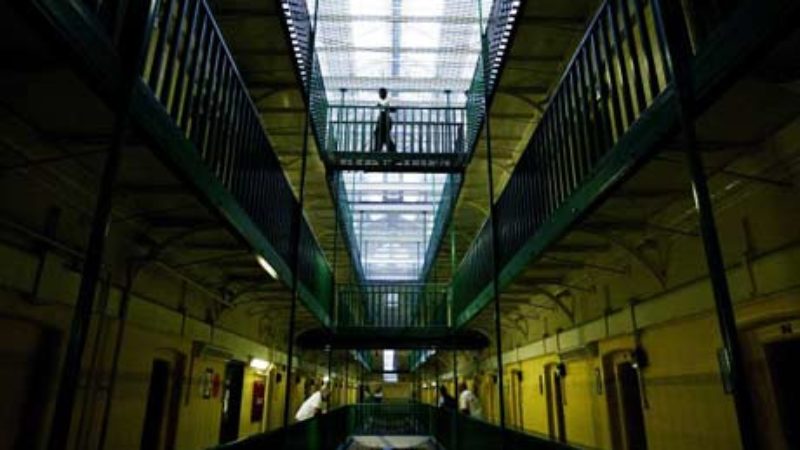

Almost exactly two years ago Keir Starmer made his opening speech as Prime Minister from the lectern outside 10 Downing Street. Amongst the usual content, he bravely brought attention to a normally taboo subject for the politically cautious – the prisons crisis he had inherited. Even more bravely, he acknowledged that prisons in the UK were too full, and we could no longer ignore the financial and social costs of not doing enough to rehabilitate prisoners.
At the same time, James Timpson was being appointed as Minister for Prisons. Bringing in a successful businessman to run a notoriously tricky public service was another bold move, particularly as he was an unapologetic advocate of the potential for prisoners to be more than their past – to reform and live positive and productive lives. James had put his money where his mouth was by employing thousands of ex-prisoners in his family business, with excellent results.
Those of us working in the prisons sector have seen dozens of ministers come and go over the decades – almost all seeing the role as an (albeit tricky) stepping stone on to better things and pursuing the familiar (but misguided) approach to reducing crime: longer sentences and harsher punishments. Aside from the short-lived reforming zeal of David Guake and Rory Stewart in 2018 – the two ultimately Brexited out of their roles – most ministers have come and gone without even attempting to address the looming crisis. In that context, James Timpson’s two years in the job represents relative stability and longevity.
READ MORE: ‘Reciprocism: a new relationship between citizens and the state’
And he was a reformist, genuinely trying to follow-up on his promise to promote rehabilitation as the primary method of reducing pressure on prisons.
He was right to do so. Rehabilitation is the most effective way to reduce reoffending and therefore the enormous social and financial cost of incarceration (average £50,000 per prison place, per year), and high rates of reoffending.
Timpson’s speeches and parliamentary appearances have provided excellent articulations of this vision, and of his determination to make the prison system less violent and chaotic and help more prisoners to escape lifestyles of crime, drugs and unemployment. In this, he can point to some positive impacts. Many prison inspection reports recognise gradual progress in staffing and control; rates of violence and self-harm are slightly down this year (albeit still at historically high levels); and the numbers of prisoners released homeless or unemployed is marginally lower than pre-2024 levels.
The question is: where now following Timpson’s resignation? Andy Burnham was right to call for a review of the ‘earned progression’ scheme following the uproar over the possible early release of the killers of PC Andrew Harper. But the problems go so much deeper. The bottom line is that if you want to have enough space in the prison system to contain dangerous and violent individuals for the long-term, you need to also get serious about alternatives to prisons that can accommodate the (majority) of offenders who pose less direct risk to the public.
Become a friend of LabourList and join our community. Our friends support our vital non-factional work and get access to exclusive content and events.
Successive ministers, including Timpson, have been offered workable alternatives for this cohort of prisoners: diversion to community-based treatment for people whose offending is driven by alcohol or drug addiction; diversion to women’s centres for the (majority of) women prisoners whose offending is linked to coercive control; creative reform of education and employment pathways for prisoners. All of these have the potential to significantly reduce pressure on prison numbers, while removing the drivers of repeat offending.
Subscribe here to our daily newsletter roundup of Labour news, analysis and comment– and follow us on TikTok, Bluesky, WhatsApp, X and Facebook. You can also write to our editor to share your thoughts on our stories and share your own. The best letters are published every Sunday.
-
- SHARE: If you have anything to share that we should be looking into or publishing about this story – or any other topic involving Labour– contact us (strictly anonymously if you wish) at [email protected].
- SUBSCRIBE: Sign up to LabourList’s morning email here for the best briefing on everything Labour, every weekday morning.
- BECOME A FRIEND: If you enjoyed this, why not consider becoming a Friend of LabourList? Help sustain our journalism, and of course Friends do get benefits…
- PARTNER: If you or your organisation might be interested in partnering with us on sponsored events or projects, email [email protected].
- ADVERTISE: If your organisation would like to advertise or run sponsored pieces on LabourList‘s daily newsletter or website, contact our exclusive ad partners Total Politics at [email protected].



More from LabourList
The art of the political apology
Delivering in Government: your weekly round up of good news Labour stories
‘The Budget must not leave renters out in the cold’