

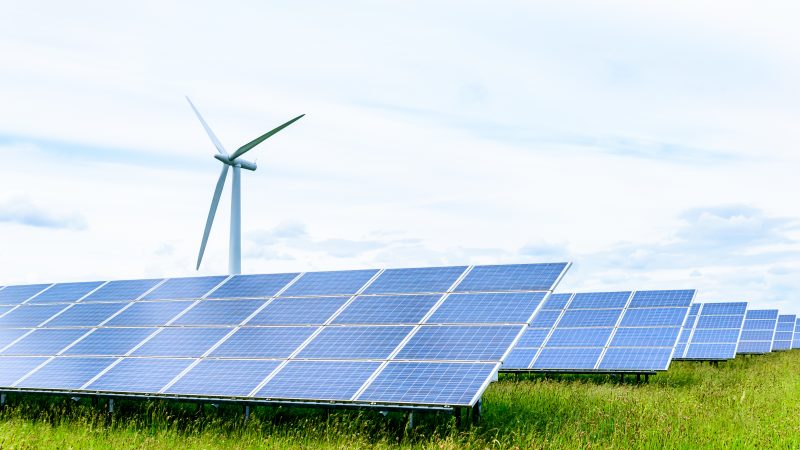

Net zero is too often cast as a luxury we cannot afford – a cost loaded onto struggling families to fix a problem they did not create. I want to make the opposite case. Done well, the transition to clean energy is one of the most powerful anti-poverty strategies we have.
Over the past two years, this Labour Government has set out a clear mission to make Britain a clean energy superpower, rebuild our infrastructure, and deliver growth that is sustainable and shared. Under Ed Miliband’s leadership at the Department for Energy Security and Net Zero, that mission has translated into investment flowing into communities, industries retooling, and jobs being created across the country.
The latest independent data tells a powerful story. The Energy and Climate Intelligence Unit (ECIU) and CBI Economics recently found that the UK’s net zero economy now supports more than 1.1 million jobs, generating around £105 billion in economic value every year. Far from being a pipe dream, far from the Government moving too fast to achieve decarbonisation targets, the fact is that Net Zero is the new reality of the British economy.
But jobs are only half the picture. The deeper case is that our dependence on fossil fuels itself drives poverty. Gas sets the wholesale price of electricity most of the time, so every global price shock pushes more families into fuel poverty. The lowest-income households spend close to 15 per cent of their income on energy, compared to an average of around 7 per cent for the country as a whole. Clean, home-grown power that is not answerable to the gas market is, over time, cheaper and less volatile. Decarbonisation is not a burden on families in fuel poverty. It is a route out.
READ MORE: ‘Resilient communities and lower bills. Under Burnham Labour will achieve both.’
That should fundamentally reshape how we talk about climate policy; it is one of the most effective economic strategies Britain has. Last year, Labour announced our flagship Clean Energy Jobs Plan, backed by the unions and described by TUC General Secretary Paul Nowak as “a serious plan to start to rebuild our industrial heartlands and deliver quality jobs”. It is already in action, developing the workforce needed to deliver our clean energy ambitions.
This Government understood the need to reach out to industry and investors from day one. In our first two years, we moved decisively to restore certainty for investors and businesses. The lifting of the onshore wind ban in England, the scaling up of offshore capacity, and the commitment to decarbonise the power system by 2030 all set a clear direction of travel, giving the business community the certainty needed to invest in the UK.
We have backed that direction with Government investment, too. The expansion of funding for clean energy innovation, the Warm Homes Plan to upgrade millions of properties, and major support for nuclear, carbon capture and renewables have together created a significant pipeline of green infrastructure projects that will help to bring down domestic energy bills and boost Britain’s energy security.
Most importantly, we have ensured that this transition reaches beyond Whitehall and corporate boardrooms. The commitment of up to £1 billion for community energy schemes, delivered by publicly owned GB Energy, will help to put power, literally and economically, into the hands of local people.
However, success should not breed complacency. The risks of stepping back are real. Investors are making long-term decisions about where to build the industries of the future. Competing economies are doubling down on clean energy and green manufacturing. If Britain hesitates now, the jobs and investment we have begun to attract could just as easily flow elsewhere.
Become a friend of LabourList and join our community. Our friends support our vital non-factional work and get access to exclusive content and events.
Ed Miliband has been right to make the argument that clean energy is an economic and security imperative, not only a climate one. Nonetheless, we should be clear-eyed about what comes next, because the binding constraint is no longer political will. It is delivery.
Spending two decades in construction and infrastructure before entering Parliament taught me that the gap between a published target and a finished asset is where ambition usually dies. Upgrading some 29 million homes, reinforcing the grid and building out charging infrastructure is one of the largest built environment programmes this country has ever attempted. Getting the design and delivery right matters every bit as much as the political commitment, yet it is the part we talk about least.
The priorities for the next Prime Minister should be unsentimental. We must accelerate planning and grid upgrades, so projects can move from blueprint to reality faster. We must be honest that clean power is cheaper to produce but bills will not fall on their own. Without unlinking gas and electricity pricing, and shifting legacy costs and levies off bills, households will not feel the benefit they have been promised. We must keep investing in skills, so workers in every region can access the opportunities of the transition. And we must deepen partnerships with industry, giving businesses the confidence to invest for the long term.
A sector supporting over a million jobs, worth more than £100 billion annually, and growing faster than much of the rest of the economy is not a policy risk. It is a golden political opportunity. The task for the next phase of this Government is to grasp it with both hands. It is to prove we can build at the pace and scale the moment demands, and to make sure the families who stand to gain the most are the ones who feel it first.
Subscribe here to our daily newsletter roundup of Labour news, analysis and comment– and follow us on TikTok, Bluesky, WhatsApp, X and Facebook. You can also write to our editor to share your thoughts on our stories and share your own. The best letters are published every Sunday.
-
- SHARE: If you have anything to share that we should be looking into or publishing about this story – or any other topic involving Labour– contact us (strictly anonymously if you wish) at [email protected].
- SUBSCRIBE: Sign up to LabourList’s morning email here for the best briefing on everything Labour, every weekday morning.
- BECOME A FRIEND: If you enjoyed this, why not consider becoming a Friend of LabourList? Help sustain our journalism, and of course Friends do get benefits…
- PARTNER: If you or your organisation might be interested in partnering with us on sponsored events or projects, email [email protected].
- ADVERTISE: If your organisation would like to advertise or run sponsored pieces on LabourList‘s daily newsletter or website, contact our exclusive ad partners Total Politics at [email protected].



More from LabourList
‘Back Burnham over Brexit’
Delivering in local government: How Labour is building a better Britain everywhere
‘Changing our voting system is fundamental to Burnham’s agenda’