


The prime ministerial baton has been passed on.
Andy Burnham offers a more telling diagnosis of Britain’s ailments than Starmer, with a more explicit critique of the weaknesses of the British economic model. He has a clearer vision of a better economy through what he calls ‘business-friendly socialism’. There is the promise of greater boldness, raising hopes of outflanking the rise of the authoritarian right.
Burnham’s central offer is to roll out ‘Manchesterism’ – his attempt to revive the city region where he has been mayor since 2017 – through the rebalancing of power away from Westminster. There is talk of a faster process of de-privatisation, greater public control over the cost of basic necessities, a national plan for social care, and electoral reform. The vision is of a more active and productive state that can step in to tackle the failures of private markets and steer national capacity for progressive change.
These promises alone would be quite an agenda if they can be realised. Many are new, while others add up to continuity Starmer, if perhaps pacier and better communicated. The outgoing prime minister, for example, has already committed Labour to greater public ownership and an end to decades of the private out-sourcing of service provision.
READ MORE: Read Andy Burnham’s first speech as Labour leader in full
A bigger step up might see a block on a third Heathrow runway and a green light for HS2 North – to be run by local councils. It might include a plan to steer the tax system away from its overwhelming dependency on earnings towards capital and wealth. Then there’s the possibility of a reform of business rates away from small businesses to the bigger players such as Amazon.
But Burnham will ultimately be judged on whether he can revive Britain’s still stagnant economy and raise living standards. Here he is having to work with weak public finances and his own pledge to keep within the Treasury’s existing fiscal rules.
The biggest obstacle to restoring Britain’s lost capacity for progress comes from another source – our dependency on overseas capital for investment. This an issue yet to be addressed by the new Prime Minister. But the share of Britain’s corporate and social infrastructure owned outside of the UK has risen from 8 to 54% since the 1960s. Attempts to boost an ailing economy has meant multiple deals with big international mostly with big international, mostly Silicon Valley and New York-based corporations. Holding the upper bargaining hand, their boardrooms demand and have been awarded generous financial sweeteners and minimal conditions in return. The controversial American data mining and surveillance company Palantir has already secured substantial contracts with key British institutions including the NHS and defence, giving the company a clear hook into a range of public policies. Building the datacentres necessary for the artificial intelligence revolution depends on similarly lucrative deals with tech giants from Microsoft to the US chip giant Nvidia.
Become a friend of LabourList and join our community. Our friends support our vital non-factional work and get access to exclusive content and events.
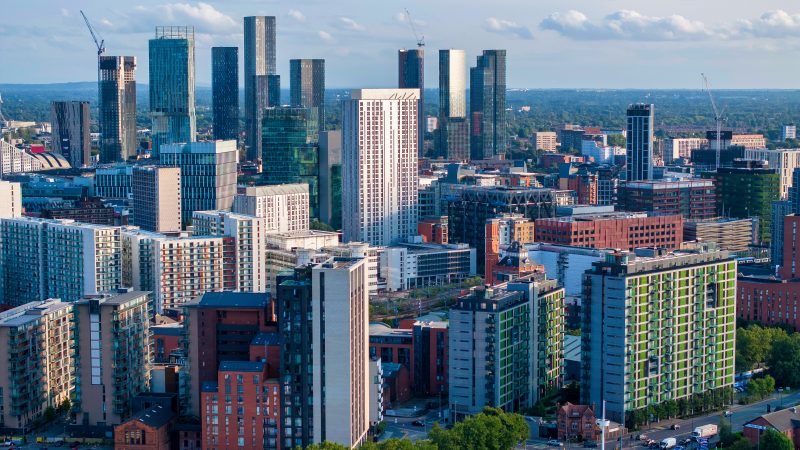
As Burnham knows from Greater Manchester, with limited public sector capacity, reviving Britain’s stagnant economy increasingly depends on state deals with private corporations. ‘Manchesterism’ has been driven by a central city office and skyscraper residential building boom by private developers courted with public subsidies. But that has meant that the growth boost it has delivered has been partial and ‘exclusive’. It has brought big returns to landowners, developers and landlords, but minimal benefit to deprived districts in the region and done little to revive the vital foundational economy that provides the essential goods and services that sustain daily lives.
The colonisation of economic power by an increasingly concentrated and unaccountable network of foreign capital has been one of the most significant global economic shifts of recent decades. It has greatly limited the capacity of governments and democratic domestic institutions, not just in the UK, to steer the direction of economic activity, and skewed the control over resource allocation to powerful private interests. The force of this attrition has been one of the key explanations for Britain’s increasingly sluggish economy and divided society.
Even under a more radical government, some of the most consequential decisions affecting Britain’s future will be taken in giant global finance, energy and tech boardrooms. A transfer of power to the regions will be a partial revolution without a return of democratic control at the centre. Checking this external power and rebuilding the state’s capacity for delivering progress is perhaps the greatest challenge facing Burnham’s undoubted commitment to serious progressive reform.
Subscribe here to our daily newsletter roundup of Labour news, analysis and comment– and follow us on TikTok, Bluesky, WhatsApp, X and Facebook. You can also write to our editor to share your thoughts on our stories and share your own. The best letters are published every Sunday.
-
- SHARE: If you have anything to share that we should be looking into or publishing about this story – or any other topic involving Labour– contact us (strictly anonymously if you wish) at [email protected].
- SUBSCRIBE: Sign up to LabourList’s morning email here for the best briefing on everything Labour, every weekday morning.
- BECOME A FRIEND: If you enjoyed this, why not consider becoming a Friend of LabourList? Help sustain our journalism, and of course Friends do get benefits…
- PARTNER: If you or your organisation might be interested in partnering with us on sponsored events or projects, email [email protected].
- ADVERTISE: If your organisation would like to advertise or run sponsored pieces on LabourList‘s daily newsletter or website, contact our exclusive ad partners Total Politics at [email protected].



More from LabourList
Delivering in local government: How Labour is building a better Britain everywhere
‘Changing our voting system is fundamental to Burnham’s agenda’
‘Labour has a chance to make the socio-economic duty mean something’