

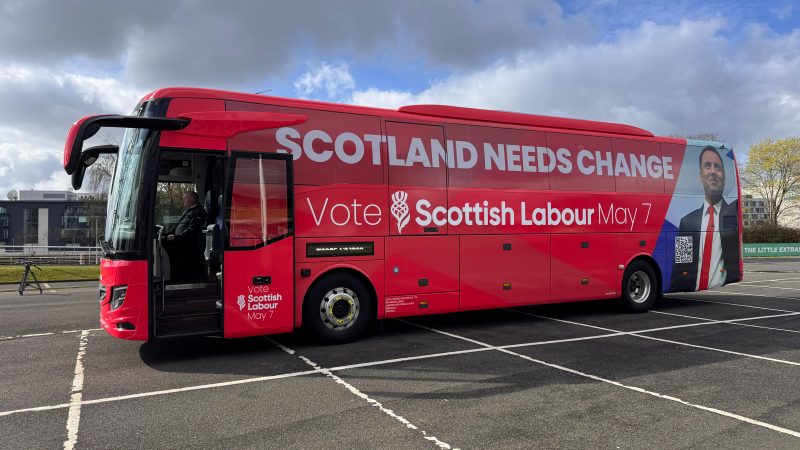

A confidential draft of Scottish Labour’s post-election review, seen by LabourList, contains 26 questions examining almost every aspect of the party’s disappointing Holyrood campaign – from campaign strategy and candidate selection to grassroots organising, relations with UK Labour and the rise of Reform UK.
But there is one notable omission.
None of the 26 questions asks specifically about the leadership of Anas Sarwar or deputy leader Jackie Baillie.
While the review will examine whether Scottish Labour had a credible political strategy, how effectively it communicated with voters and how decisions taken by the UK Labour government affected the campaign, there is no standalone question inviting members or affiliates to assess the leadership of the party itself.
It remains to be seen whether views on Scottish Labour’s leadership will emerge through broader evidence submitted to the review or whether the panel will actively explore the issue during interviews, regional meetings and written submissions.
The omission is striking given the scale of the review, which has been commissioned following Scottish Labour’s disappointing 2026 Holyrood election result. The party returned 17 MSPs after securing 19.2% of the constituency vote and 16% of the regional vote, prompting the Scottish Executive Committee to launch what it describes as a constructive examination of the campaign and the party’s organisational readiness for future elections.
What will the review examine?
The review is instead structured around five broad themes.
The first asks whether Scottish Labour’s electoral objectives were realistic, whether its campaign messages and manifesto were effective, whether it offered a credible route back to government and whether candidate selection arrangements – including twinning and zipping – supported representativeness and member confidence.
It also asks why Labour lost further seats and vote share, which voters it gained or lost, and what lessons can be learned from turnout, demographic trends and regional performance.
A substantial section examines the internal operation of the campaign, asking whether headquarters supported local campaigning effectively, whether resources were allocated well, whether members felt empowered or “managed from the centre”, and why some members chose not to campaign.
READ MORE: Scottish matters
This comes amid reports of redundancies at Scottish Labour headquarters.
The review will also consider Scottish Labour’s response to the wider political landscape, including the SNP, Reform UK, the Conservatives, Liberal Democrats and Scottish Greens, alongside the impact of UK Labour and the UK government on the Scottish campaign.
Who will be asked?
The review aims to gather evidence from across the Labour movement.
Members, candidates, activists, constituency Labour parties, trade unions, socialist societies, affiliates, staff, elected representatives and campaign teams will all be invited to contribute through surveys, regional meetings, interviews and written submissions. Members who did not campaign during the election will also be specifically encouraged to participate, while confidential routes for evidence will be available.
The terms of reference describe the process as “evidence-led” and “participatory”, grounded in the experiences of members and local parties rather than solely relying on campaign data.
Looking beyond the campaign
The review extends well beyond the election itself.
Become a friend of LabourList and join our community. Our friends support our vital non-factional work and get access to exclusive content and events.
It will examine the relationship between Scottish Labour headquarters and constituency parties, member recruitment and retention, activist morale, community engagement between elections, campaign governance, finance, staffing and the relationship between Scottish Labour and UK Labour. It also explicitly states that difficult organisational and cultural questions should not be avoided where evidence suggests they contributed to the election result.
What happens next?
Interim findings are scheduled to be presented to the Scottish Labour Executive on Saturday (11th July), with a final report due by 12 September. An implementation plan is then expected to be agreed by 18 October, with progress monitored by the party’s Organisational Sub-Committee.
There will also be consultation events with Scottish Labour members.Meetings will be held for each Scottish Parliament region on the following dates:
Highlands and Islands: Tuesday 14th July, 7pm – 9pm
North East: Wednesday 15th July, 7pm – 9pm
West of Scotland: Saturday 18th July, 10am – 12pm
South of Scotland: Saturday 18th July, 2pm – 4pm
Glasgow: Sunday 19th July, 11am – 1pm
Mid-Scotland and Fife: Monday 20th July, 7pm – 9pm
Edinburgh and Lothians East: Tuesday 21st July, 7pm – 9pm
Central Scotland and Lothians West: Wednesday 22nd July, 7-9pm
LabourList has approached Scottish Labour for comment.
The review questions in full.
- What were Scottish Labour’s objectives for the 2026 election, and were they realistic and clearly understood?
- How effective were the party’s campaign message, manifesto and policy offer?
- Did Scottish Labour have a clear and credible route to rebuilding support, increasing representation and presenting itself as a party of government
- How effectively did Scottish Labour communicate with voters about the issues that mattered most to them?
- How effective were candidate selection arrangements, including any twinning and zipping arrangements, in supporting representativeness, local credibility, campaign effectiveness and member confidence
- Why did Scottish Labour experience a further fall in seats and vote share?
- Which voters did Scottish Labour gain, retain, lose or fail to persuade?
- What can be learned from regional, constituency and demographic voting patterns, including turnout and voter disengagement?
- What can be learned from areas where Labour overperformed, underperformed, held support, or failed to mobilise previous or potential Labour voters?
- How well did the national campaign support local and regional campaigning?
- Were campaign resources, data, staff, volunteers and finances used effectively?
- Did internal structures, decision-making and party culture support an effective campaign?
- How effectively did Scottish Labour work with CLPs, local campaign forums, candidates, agents, activists and volunteers?
- Were local knowledge, local feedback and community relationships listened to and used effectively during the campaign?
- Did members and activists feel valued, supported and empowered, or did they feel managed from the centre?
- Why did some members choose not to campaign, or campaign less than they might otherwise have done, and what could have encouraged greater participation?
- What were the different experiences of battleground and non-battleground candidates, and were there differences in support, visibility, autonomy or resources?
- What issues, including gender or other equality-related factors, affected th experience of candidates, activists and campaign teams?
- How effectively did Scottish Labour respond to the wider political context, including the SNP, Reform UK, the Scottish Greens, the Conservatives, Liberal Democrats and constitutional politics?
- What does the rise of Reform UK mean for Scottish Labour’s voter coalition, campaigning strategy and political positioning?
- What does the increased representation of the Scottish Greens mean for Scottish Labour’s appeal to progressive, younger, urban, climate-conscious and pro-devolution or pro-independence voters?
- How did the performance, reputation and decisions of UK Labour and the UK Government affect Scottish Labour’s campaign?
- How did voter disengagement, distrust of politics and falling turnout affect Scottish Labour’s performance?
- What practical changes are required to improve Scottish Labour’s performance at future elections?
- What needs to change in Scottish Labour’s year-round organising, member engagement, community presence, candidate development, campaign planning and relationship with affiliates?
- What recommendations should be prioritised in advance of the next major electoral contest?
Subscribe here to our daily newsletter roundup of Labour news, analysis and comment– and follow us on TikTok, Bluesky, WhatsApp, X and Facebook. You can also write to our editor to share your thoughts on our stories and share your own. The best letters are published every Sunday.
-
- SHARE: If you have anything to share that we should be looking into or publishing about this story – or any other topic involving Labour– contact us (strictly anonymously if you wish) at [email protected].
- SUBSCRIBE: Sign up to LabourList’s morning email here for the best briefing on everything Labour, every weekday morning.
- BECOME A FRIEND: If you enjoyed this, why not consider becoming a Friend of LabourList? Help sustain our journalism, and of course Friends do get benefits…
- PARTNER: If you or your organisation might be interested in partnering with us on sponsored events or projects, email [email protected].
- ADVERTISE: If your organisation would like to advertise or run sponsored pieces on LabourList‘s daily newsletter or website, contact our exclusive ad partners Total Politics at [email protected].



More from LabourList
Good growth in every postcode 21st October 2026
‘Labour must put culture at the heart of their youth mental health plan’
‘The Thames Valley is driving growth. Devolution can turbocharge it.’