


The Foreign Office has been accused of choosing “words over action” on protecting women and girls caught in conflict, after the Government published its response to a damning cross-party inquiry last month. The criticism carries weight. The UK’s aid budget is being cut to 0.3% of national income and funding for women’s rights organisations is reportedly down by as much as two-thirds.
But the row that the report has provoked, over budget and procedure, risks obscuring an even more important question: is UK foreign policy materially improving the lives of women and girls affected by conflict?
It is encouraging to see that there is still the political will within government to drive this agenda forward. The FCDO recently announced the appointment of Minister for Human Rights, Chris Elmore MP as the UK Special Envoy for Preventing Sexual Violence in Conflict. The move follows the Foreign Secretary’s launch of a new UK-convened International Coalition to End Violence against Women and Girls in May.
And yet, in its report Peace under pressure, the International Development Committee (IDC) warned that Ministers risk “standing idly by whilst hard-won gains in global gender equality are lost.” The IDC singled out the UK’s failure to convene a “single dedicated session on women peace and security” during its UN Security Council (UNSC) Presidency in February 2026: a particularly condemnatory charge given the UK’s role as UNSC penholder for the Women, Peace and Security (WPS) agenda.
The Government disputes this, pointing to its use of the Presidency to invite women to brief the Council on Syria, Sudan and the Middle East Peace Process as “one of the most credible, meaningful and impactful ways to anchor WPS.” Threading women’s voices through country files, it argues, secures real protections where a standalone debate too often lets rhetoric stand in for implementation.
Both positions have merit. Without a dedicated session the agenda risks slipping down the order paper; yet a country mandate can do more for a woman in Goma or El Fasher than even the warmest reception in New York.
As chair of the Labour Africa Network, I have spent countless hours engaging with parliamentarians and politicians on exactly these issues. The argument over forum obscures what actually decides whether either works. Is it top-down, or partner-led? Does it speak about women affected by conflict, or empower them to be at the heart of policy development?
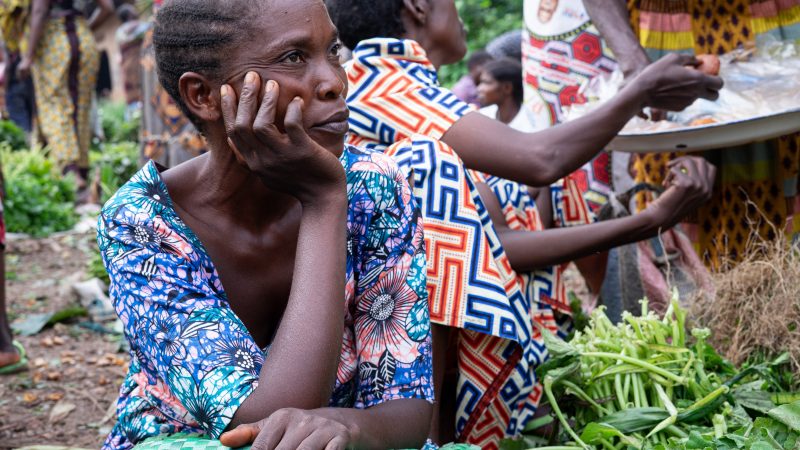
Take eastern DRC, where the UK works through the International Contact Group for the Great Lakes to attempt to secure peace, address humanitarian crises, and foster regional stability. Any workable solution must first reckon with the historic context: three decades of recurring atrocities against the Congolese people, including widespread conflict-related sexual violence and mass displacement, committed with far too much impunity. Then it must empower the victims to shape what comes next.
That is precisely the model taking shape in the DRC itself. The Fonds National des Réparations des Victimes (FONAREV) has identified more than 250,000 victims of conflict-related sexual violence, the majority being women and girls. It, alongside the Commission Interinstitutionnelle d’Aide aux Victimes et d’Appui aux Réformes (CIA-VAR), advocates for transitional justice, proposing reforms meant to ensure such crimes are never repeated.
Theirs is the approach the WPS agenda is meant to embody, providing physical, legal and financial support for survivors with the aim of turning them into advocates in their own right – for justice, and for international recognition of the atrocities inflicted on the Congolese.
These are the kind of organisations that the FCDO, and its multilateral partners, should be engaging with – seeking testimony, on-the-ground insight, and ultimately guidance on how best to support countries out of war into an era of stability and safety; particularly for those women and girls who too often experience the darkest side of conflict.
When peace comes, it must be carried forward by women and girls. Frameworks shaped by women and women’s organisations are not only more likely to be reached, but more likely to hold. They tend to be broader, better implemented, and rooted in the communities expected to live by them.
Parliament and the Government can keep debating how best to practically deliver on the WPS agenda in the UN, but the answer lies elsewhere – closer to the ground, and closer to the women themselves.
Become a friend of LabourList and join our community. Our friends support our vital non-factional work and get access to exclusive content and events.
Subscribe here to our daily newsletter roundup of Labour news, analysis and comment– and follow us on TikTok, Bluesky, WhatsApp, X and Facebook. You can also write to our editor to share your thoughts on our stories and share your own. The best letters are published every Sunday.
-
- SHARE: If you have anything to share that we should be looking into or publishing about this story – or any other topic involving Labour– contact us (strictly anonymously if you wish) at [email protected].
- SUBSCRIBE: Sign up to LabourList’s morning email here for the best briefing on everything Labour, every weekday morning.
- BECOME A FRIEND: If you enjoyed this, why not consider becoming a Friend of LabourList? Help sustain our journalism, and of course Friends do get benefits…
- PARTNER: If you or your organisation might be interested in partnering with us on sponsored events or projects, email [email protected].
- ADVERTISE: If your organisation would like to advertise or run sponsored pieces on LabourList‘s daily newsletter or website, contact our exclusive ad partners Total Politics at [email protected].



More from LabourList
Several Labour MPs warn Jackdaw approval could undermine climate progress
2008 and all that…
‘Devolution and social care are inextricably linked’