

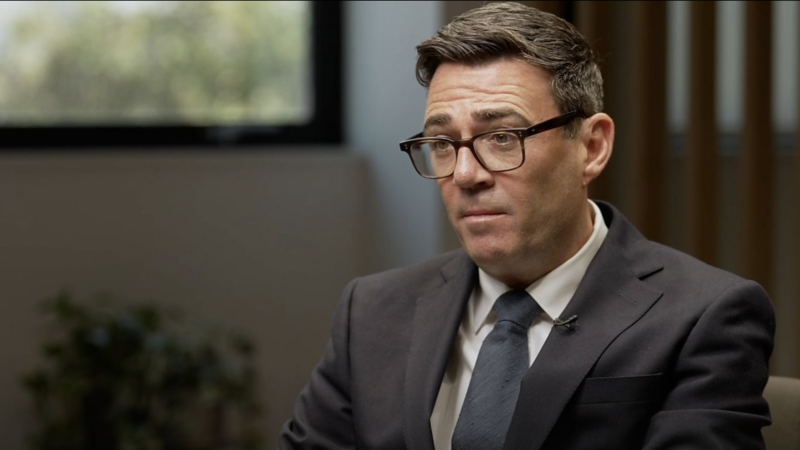

There are few areas of policy as thorny as social care – or as important. There are also few issues that Andy Burnham has such a long history with. Few know better the long-term political pain of trying to grasp this nettle. All politicians agree that something must be done. But the details of how to shape and fund that something have led to acrimonious collapse of political consensus time after time.
As Health Secretary, Burnham was the principal architect of Labour’s first attempt to build a National Care Service. But then at the 2010 election Cameron and Osborne reverted to Tory type attacking plans to pay for this as a ‘death tax’. Cross-party talks collapsed and reform was shelved.
Labour are not immune to criticism on this front. When Theresa May’s 2017 manifesto contained plans to include the value of someone’s home in their means-testing the policy it was dubbed a ‘dementia tax’ by our side during the election campaign leading to a humiliating public u-turn by May. When her party vastly underperformed in that election this was seen as a key reason. Once again the reform was shelved.
Boris Johnson, too, proposed a social care levy, that was then scrapped during the brief disastrous Liz Truss premiership.
All of which is to say that this has long been a hot potato for politicians of all parties – internally and externally.
READ MORE: Ben Cooper column: ‘A National Care Service for everyone’
But the problem has not gone away. In fact it has just got more and more urgent. The 2021 census found that there are 5.8 million unpaid carers in the UK. The cost of care has fallen on families disproportionately and largely without regard to their ability to bear them.
Labour’s 2024 manifesto committed to creating a National Care Service but in government again faced criticism when this was seen to be pushed into the long grass with yet another review, albeit one led by government super-reviewer Louise Casey who is widely seen as someone who can untie Gordian knots.
There is no shortage of ideas of how to reform social care. From Andrew Dilnot to the Fabian Society much thinking has gone into what a National Care Service should look like, how it should be funded and how it should deal with the very different needs of older people and people with disabilities.
It may well be the case that a National Care Service will lead to vastly reduced pressures on the NHS – and thus savings in the long term. But the political reality is that there will be upfront costs to doing this and governments are bad at accepting that. This is why it has always been desirable for there to be cross-party consensus on what should be done.
But the early signals of Tory cooperation – or them being able to deal with the reality of the country they want to run – are not good. Badenoch says: “The Conservatives are happy to work with you and other parties on reforming social care. But we will only support a solution that abides by two core principles.” As the saying goes, everything before the ‘but’ doesn’t count.
Become a friend of LabourList and join our community. Our friends support our vital non-factional work and get access to exclusive content and events.
However, cross-party consensus – and the appearance of it – does not have to mean all-party consensus.
The Liberal Democrats don’t get much attention in this Parliament. They are neither excitingly insurgent populists like Reform and the Greens nor are they the largest opposition party – a label the Tories clung onto despite one of their worst ever results. However, their party has made reform of social care a major part of its campaigning. Ed Davey’s election broadcast on the topic was widely praised. Working constructively with the government on this issue may be the chance they need to bring themselves back into the national political conversation.
If Labour and the Lib Dems join forces to support plans for a National Care Service that would mean nearly three quarters of MPs voting for the changes. To the public that would look enough like cross-party consensus to leave the Tories looking irrelevant and petulant.
More importantly, it could embed the vital and necessary changes into a place politically where the support can exist over a term longer than electoral cycles usually allows for.
Andy Burnham has made clear this is an issue he is willing to spend his political capital on. He will need to keep that focus on this as it gets harder and he gets challenged from all sides. But if he does, this government could be as transformational to our lives as the Attlee government which set up the NHS.
Subscribe here to our daily newsletter roundup of Labour news, analysis and comment– and follow us on TikTok, Bluesky, WhatsApp, X and Facebook. You can also write to our editor to share your thoughts on our stories and share your own. The best letters are published every Sunday.
-
- SHARE: If you have anything to share that we should be looking into or publishing about this story – or any other topic involving Labour– contact us (strictly anonymously if you wish) at [email protected].
- SUBSCRIBE: Sign up to LabourList’s morning email here for the best briefing on everything Labour, every weekday morning.
- BECOME A FRIEND: If you enjoyed this, why not consider becoming a Friend of LabourList? Help sustain our journalism, and of course Friends do get benefits…
- PARTNER: If you or your organisation might be interested in partnering with us on sponsored events or projects, email [email protected].
- ADVERTISE: If your organisation would like to advertise or run sponsored pieces on LabourList‘s daily newsletter or website, contact our exclusive ad partners Total Politics at [email protected].



More from LabourList
Labour MP Perran Moon suspended over Covid loan allegations
‘From Hillsborough to the Troubles: Labour must deliver truth and accountability for every family’
Delivering in local government: How Labour is building a better Britain everywhere