

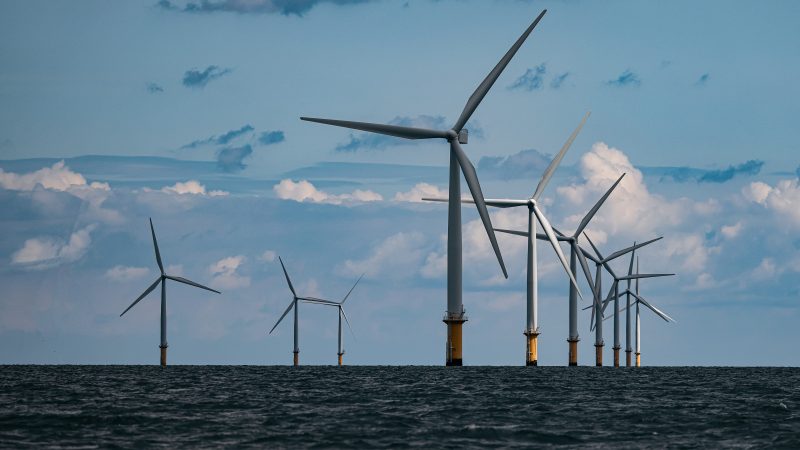

The government’s record-breaking offshore wind auction last week was a win for the energy sector. It will help deliver energy security and protect against possible price rises. It just isn’t a win for bringing down energy bills.
Ed Miliband is correct to call out the right-wing press for misleading the public on the high cost of net zero. But if the government does not articulate that these latest offshore wind contracts are delivering insurance, not cost reductions, they risk losing trust and triggering a backlash against climate action.
Contract for Difference (CfD) auctions have supported the renewables sector for over a decade. These government-backed contracts guarantee a fixed price for electricity generators over 15 to 20 years, which rises with inflation. The government pays generators a subsidy if wholesale (“free market”) prices are lower than their guaranteed price or receives a payment if wholesale prices rise above the guarantee. These contracts lower the risk of building electricity projects, which in turn reduces financing costs.
The latest auction, Allocation Round 7, awarded contracts to 8.4 gigawatts (GW) of offshore wind, adding 50% to current capacity. This is crucial for the government to meet its ‘Clean Power by 2030’ target. It will deliver new supply from 2028/29 at a time of increasing electricity demand and global instability, and reduce Britain’s exposure to volatile gas prices.
The government paid extra for this security of supply, despite the narrative of reducing energy bills. Costs have risen since previous auction rounds due to higher interest rates and supply chain constraints. Capacity was awarded at an average of £0.091 per kilowatt-hour (kWh) in 2024 prices. This is 17% higher than average wholesale electricity prices in 2025 (£0.081 per kWh according to Montel), after adjusting for one year’s inflation to the contracted price (£0.094 per kWh).
The UK benefits from this auction because the government has effectively purchased an insurance policy against wholesale prices going up further, reducing exposure to shocks. They have also backed a technology that is almost 40% cheaper than building new gas.
JOIN LABOURLIST ‘IN CONVERSATION’ WITH STEVE ROTHERAM ON 3rd FEB
This may be prudent energy system planning, but it is not the same as promising voters a bill reduction. CfDs cannot change bills until the projects come online. When they eventually do, people will be able to compare their bills to previous ones, and they will never see the avoided cost of even more expensive generation options.
CfDs awarded at a higher price than the 2025 average may not reduce bills in absolute terms once inflation is baked in. The CfD is likely to be “cost neutral” according to Aurora analysis. Contracted renewables can push the most expensive gas off the grid and reduce wholesale prices overall, but this is offset by subsidy payments to generators. Conversely, if wholesale prices go up, these contracts will mitigate some of the increase. Bills would still rise, but not by as much.
There is nothing wrong with delivering protection from price shocks and a secure energy supply. The political problem is promising that this protection will bring bills down.
A whole host of other policies could reduce bills in parallel and mitigate against higher costs to come in networks and new levies. Moving policy costs off the bill is the simplest solution that the government has started pursuing, but is a superficial saving. Electricity would feel cheaper, though the costs would still be borne by the Treasury. Similarly, scrapping carbon taxes would reduce bills but cost the Treasury billions of pounds in lost revenue in the short term and decrease policy stability for long-term investment.
Subscribe here to our daily newsletter roundup of Labour news, analysis and comment– and follow us on Bluesky, WhatsApp, X and Facebook.
Cutting real costs is harder, but doable. One option is focusing on deploying cheaper technologies that require less subsidy and can be built faster, like solar and onshore wind. The government could continue improving processes like planning and environmental assessments to reduce construction costs for all technologies, and speed up grid connections by allowing more private participation in the build-out. Supporting flexible technology like batteries and controlling demand from electric vehicles and heat pumps could reduce the requirements for grid investment and lower the cost of balancing renewables on the grid.
Labour has the potential to deliver energy security and lower costs in this government using a variety of policy levers. Not every policy will deliver both. For now, CfDs are more about offering protection against price shocks than they are about lowering bills from 2025 levels. Framing criticism of clean energy policies as right-wing propaganda silences debate about the true benefits and trade-offs of the government’s energy policies. There’s no shame in admitting that the government is using offshore wind to protect people from price shocks, while getting on with the rest of its agenda to deliver low-cost energy.
Share your thoughts. Contribute on this story or tell your own by writing to our Editor. The best letters every week will be published on the site. Find out how to get your letter published.
-
- SHARE: If you have anything to share that we should be looking into or publishing about this story – or any other topic involving Labour– contact us (strictly anonymously if you wish) at [email protected].
- SUBSCRIBE: Sign up to LabourList’s morning email here for the best briefing on everything Labour, every weekday morning.
- DONATE: If you value our work, please chip in a few pounds a week and become one of our supporters, helping sustain and expand our coverage.
- PARTNER: If you or your organisation might be interested in partnering with us on sponsored events or projects, email [email protected].
- ADVERTISE: If your organisation would like to advertise or run sponsored pieces on LabourList‘s daily newsletter or website, contact our exclusive ad partners Total Politics at [email protected].



More from LabourList
‘It is time for the Lords Spiritual to leave the House of Lords’
‘MattGPT and Me’
Fight for London begins as Labour launch local election campaigns across England