

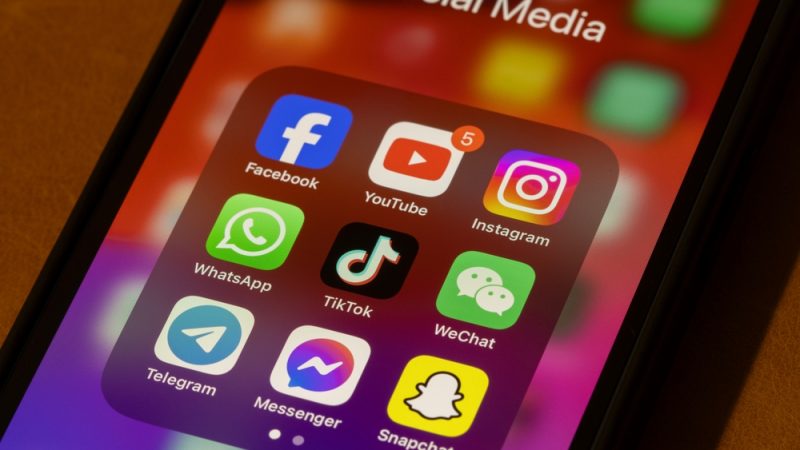

In the last few days, the debate around social media and its impact on young people has reached a crescendo. Hundreds of my constituents have contacted me, and there is a growing consensus that now is the time for action. While this strength of feeling is entirely justified, I fear we risk becoming locked into a policy debate that is far too narrow in scope.
Discussions are increasingly centred on whether the UK should follow Australia’s example and ban social media for under-16s. However, by focusing on a single measure, we risk oversimplifying a complex problem. To genuinely support children and families, we must take a holistic approach, addressing social media, smartphones, and platform design as interconnected, rather than separate, issues.
Having heard from many parents and spoken with children during school visits in my constituency, I believe that the crux of the issue is the pervasive presence of smartphones and social media in young people’s lives. Pupils consistently raise worries about the pressure to be constantly available, the anxiety of what might be waiting for them on their phones, and the difficulty of switching off. Meanwhile, parents often report uncertainty about how best to act, concerned that setting boundaries could socially disadvantage their children.
READ MORE: Social media ban for under-16s proposed in government consultation
Reflecting on my own childhood, it becomes clear why this pervasiveness is so damaging. The combination of smartphones and social media means that, unlike in the past, even time spent at home is no longer a safe space away from bullying. A child can be targeted at any time of day, with little chance of respite.
On top of this, young people often check their phones on a Friday night and find themselves effectively livestreaming a party they were not invited to. Against this backdrop, is it any wonder that studies show rates of anxiety, depression, and self-harm among young people have risen sharply in recent years? This is an urgent public health issue.
Whilst these are serious concerns, it would be a mistake to attribute these outcomes to social media use alone. The more profound shift has been from intentional, time-limited internet use to a state of constant connectivity. Going online used to be a deliberate decision, often via a shared desktop computer. Today, connectivity no longer requires a conscious choice. Social media and online content more broadly operate continuously in the background of daily life, intruding through an endless barrage of notifications, content, and short-form video.
JOIN LABOURLIST ‘IN CONVERSATION’ WITH STEVE ROTHERAM ON 3rd FEB
Powerful companies have invested heavily in building an all-encompassing infrastructure designed to be addictive and capture as much attention as possible. It is effective in distracting adults, let alone children. This “always-on” environment fragments attention, diminishes the quality of offline life, and makes it harder for young people to be present in the moment. We must not forget these pressures have not emerged by accident, they are the product of platform designs and business models that prioritise engagement above all else.
At the same time, our response must avoid being overly blunt. Some online spaces provide genuine benefits for young people, particularly spaces centred on shared interests and communities that allow them to connect around shared identities or hobbies. These spaces can offer learning, support, and a sense of belonging, especially for those who may feel marginalised offline. Any restrictions must therefore be carefully defined, targeting the most harmful features, platforms, and business models, instead of cutting children and young people off from their chance to find their tribe.
Subscribe here to our daily newsletter roundup of Labour news, analysis and comment– and follow us on Bluesky, WhatsApp, X and Facebook.
I fear that a narrow focus on banning social media for under-16s, while appealing in its simplicity, will not be effective. It will not end the “always-on” environment. We need a broader approach that takes into consideration the cumulative effect of social media, smartphone use, and online behaviour and design. This could include exploring the use of restricted hardware by under-16s, which would allow contact for safety and practical purposes without exposing children to addictive apps. It could also include stronger platform-level protections, such as default settings that curb push notifications, infinite scroll, short-form video, and personalised algorithms. All while ensuring existing legislation is rigorously enforced.
The Government consultation announced yesterday presents an opportunity to broaden the debate and deliver genuinely effective solutions for our children. By recognising that social media, smartphones, and platform design are inseparable, and that we can’t tackle this issue by focusing on any one part in isolation, we can move beyond the blunt instrument of a narrow ban, and towards an approach that genuinely supports families and protects young people’s wellbeing.
Share your thoughts. Contribute on this story or tell your own by writing to our Editor. The best letters every week will be published on the site. Find out how to get your letter published.
-
- SHARE: If you have anything to share that we should be looking into or publishing about this story – or any other topic involving Labour– contact us (strictly anonymously if you wish) at [email protected].
- SUBSCRIBE: Sign up to LabourList’s morning email here for the best briefing on everything Labour, every weekday morning.
- DONATE: If you value our work, please chip in a few pounds a week and become one of our supporters, helping sustain and expand our coverage.
- PARTNER: If you or your organisation might be interested in partnering with us on sponsored events or projects, email [email protected].
- ADVERTISE: If your organisation would like to advertise or run sponsored pieces on LabourList‘s daily newsletter or website, contact our exclusive ad partners Total Politics at [email protected].



More from LabourList
Labour launch major attack ad campaign exposing Reform’s record
‘It is time for the Lords Spiritual to leave the House of Lords’
‘MattGPT and Me’