

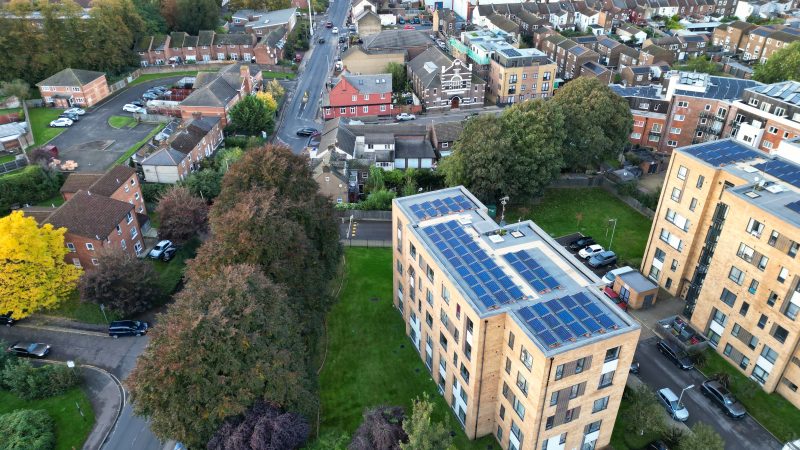

The Government’s Local Power Plan may have received little attention in the press but it marks a turning point for the future of our energy system. With £1 billion committed to supporting over a thousand local energy groups, it offers something Britain has lacked for decades: a practical route to not only deliver secure, clean energy but to also put communities at the centre of the energy transition.
At first glance, this looks like straightforward climate policy. In reality, it is much bigger. Done well at scale, it can reshape how energy is produced, owned and paid for to provide local, affordable energy that withstands global economic shocks, delivering on the cost of living, local democracy and economic fairness.
In many ways, we have been here before. The fossil fuel age delivered extraordinary benefits: abundant energy, industrial growth and rising living standards. But it also locked us into a centralised, extractive system built on combustion and emissions. As we now replace that system with renewables, the risk is not failure — it is repeating the same structural mistakes.
READ MORE: ‘Stay the Course: Why Miliband, Reeves and Starmer Must give the UK Clean Energy Independence’
The first wave of renewable deployment relied on subsidies such as feed-in tariffs and renewable obligation certificates. These were necessary to get the industry off the ground, and they worked. Costs have fallen dramatically and solar and wind are now the cheapest forms of new electricity generation.
But they also shaped the system in unintended ways. Many community energy projects became, in effect, investment vehicles — balancing returns for shareholders against benefits for local consumers. In some cases, “green” credentials justified higher prices rather than lower ones. The lesson is clear: clean technology alone does not guarantee fairness.
The Local Power Plan gives us a chance to correct that.
A key insight, increasingly accepted even within the system, is that energy should be generated as close as possible to where it is used. Rooftop solar is central to this. The UK has vast untapped capacity on homes, schools and commercial buildings — enough to meet a significant share of daytime electricity demand. This does not solve everything, particularly winter supply, but it enables a fundamental shift in the economics of energy, which the Local Power Plan can optimise.
Not every household can install solar. Not every roof is suitable. And many people cannot afford the upfront investment. But these barriers disappear if we think collectively. Instead of treating each building as a separate unit, communities can aggregate their rooftops into a shared resource.
Become a friend of LabourList and join our community. Our friends support our vital non-factional work and get access to exclusive content and events.
At scale, this unlocks everything: cheaper finance, bulk procurement, coordinated installation and integrated storage. Add smart meters, local balancing and emerging digital tools, and energy can be distributed more efficiently and at lower cost. Electric vehicles, increasingly acting as mobile batteries, would further strengthen the system.
The result is not just cleaner energy, but cheaper energy.
The underlying economics are already striking. The cost of solar hardware continues to fall sharply. Over its lifetime, a modest installation can produce electricity at a fraction of current retail prices. The question is no longer whether cheap energy is possible, but who captures the benefit.
This is where energy ownership matters.
If the new system is dominated by the same commercial structures that shaped the old one, the gains will be diluted. But if ownership is rooted in communities — through co-operatives and local institutions — the benefits can flow directly to households. Lower bills, greater resilience and a stronger local economy become reinforcing outcomes rather than competing priorities.
There is also a democratic dimension. A constituency that collectively owns a significant share of its energy supply is not just more resilient — it is more empowered. It is less exposed to price shocks and less dependent on distant corporate decisions. In a political system often skewed by concentrated interests, that matters.
None of this will happen automatically. Incumbent systems rarely yield ground easily. But the direction of travel is clear. As with previous technological shifts, once a cheaper and better model emerges, it scales rapidly.
The Local Power Plan is, in that sense, a strategic opportunity. It allows Labour not just to support renewables, but to shape the structure of the new energy economy — aligning decarbonisation with fairness, affordability and democratic renewal.
Subscribe here to our daily newsletter roundup of Labour news, analysis and comment– and follow us on TikTok, Bluesky, WhatsApp, X and Facebook. You can also write to our editor to share your thoughts on our stories and share your own. The best letters are published every Sunday.
The prize is substantial: abundant, low-cost, clean energy, owned and shared by the communities it serves – a Labour vision. We must ensure that the Local Power Plan seizes it.



More from LabourList
‘Playing it safe on Europe is the riskiest thing Labour can do’
‘Jack Charlton and Labour’s rural tradition’
Labour triumphs against Polanski, but the Green threat remains