

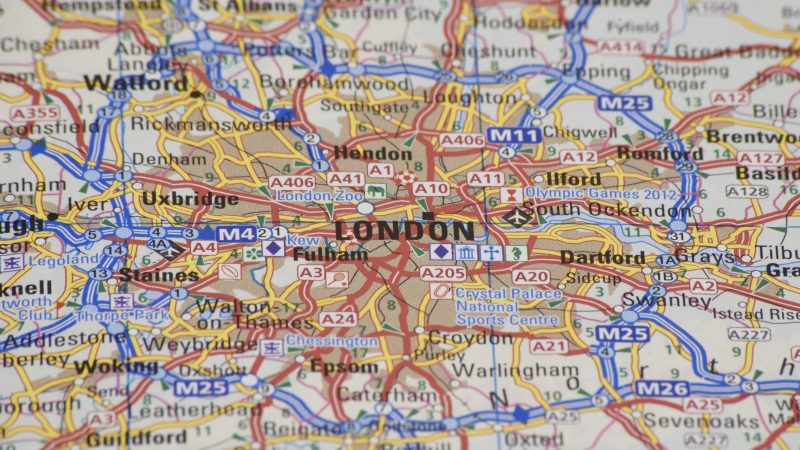

It won’t be news to anyone reading LabourList that London is currently on a countdown to another round of all-out council elections. Labour Councillors and candidates across the city are knocking on doors for hours on end and lugging bundles of leaflets up tower blocks. Our aching backs and sore feet take us beyond symbolism and slogans – out of the council chamber and party meeting rooms – and binds our politics to the pavements and stairwells of the city.
As London hums with political energy, anticipation and uncertainty for those of us who have committed ourselves to the Labour movement, this is more than a contest for seats, it’s a struggle to defend hard-won gains and to renew our pledge to working class people across the capital. The social media activist ecosystems and bubbles we are all part of are filled with predictions and speculation – and maybe far more acutely—the fast rise of new adversaries.
Chief among these on the streets of the North London I have lived in since the age of 10 is the Green Party, whose pitch and slogans have begun to attract political activists and some voters disillusioned with the status quo. However, beneath the rhetoric and social media noise lie fundamental questions about class, purpose and the real meaning of politics, why we do politics and the pathway to municipal socialism.
READ MORE: Fight for London begins as Labour launch local election campaigns across England
The roadblocks we face are not new: the fight for affordable housing, the spiralling cost of social care, a low wage economy and cuts imposed by the funding formulas and financial constraints we are up against. Our values are still rooted in solidarity and equality, but also a clear-eyed understanding of class that has been at the forefront of shaping the services and infrastructure for London’s working-class communities for generations.
This is particularly the case in Haringey, where I have been a Labour Councillor since 2014. We must never shy away from the fact that our mission is, at its heart, a class struggle. Our fight is for social justice and economic redistributive democracy, grounded in pulling and pushing the levers of power local government gives us to deliver social and economic justice. It’s this understanding that sets Labour apart from the Greens and gives Labour our enduring relevance, our moral authority, and must give us the resilience to fight in the face of shifting political tides.
The Green Party. in their pitch to the left. is offering a platform that pledges action on climate change and social equality. Well so is Labour! Their appeal is understandable. Who, after all, could object to cleaner air or fairness? However, whilst they have learned the language of social justice, it’s what they omit which is plainer to see. Because, for all the radical liberal gloss, what is absent at the heart of their politics is the language of class. Anyone left of centre should be moved by the issues they campaign on, because we campaign on those issues too. But rarely do they confront their root causes.
The Greens’ bandwagon is broad enough at the moment for many to squeeze on to, but too shallow to deliver real transformation where it matters most: in the homes and workplaces of London’s working class.
Become a friend of LabourList and join our community. Our friends support our vital non-factional work and get access to exclusive content and events.
If we look up North, the recent Gorton and Denton by-election is a snapshot of the broader challenge now facing Labour. It was set against the backdrop of our latest round of internal bloodletting, with the selection of our candidate filling up much of the news. Turnout was high, tempers at boiling point, and the result, to an extent, carries echoes of one of London’s most famous by-elections: Greenwich 1987. I remember that by-election well. I was 10, and had left my childhood home only 6 months before, and seeing snapshots of the streets of Blackheath and Charlton on news items drew my attention. My father came to visit, and while my sister and I munched on the burgers he had bought for us in Holloway he told my mum how the streets and estate we had lived on were full of activists who kept knocking on the door looking for votes, and that he thought Rosie Barnes would win. Well of course he was right, she did, and that by-election was a salutary warning of the dangers of allowing the left to fragment.
However, let’s put this into perspective: Rosie Barnes, despite her stomping victory, ultimately reflected the divided politics of the centre left and further left of the mid 1980’s. The passage of time proved that her victory did not signify the birth of new ideas, but a warning about Labour’s failure to articulate its class mission and look outwards, Labour, of course, was playing out a very public battle with Militant at the time. Hannah Spencer likewise galvanised the energy of the disaffected, but substance can often be hard to find in sharp soundbites and slogans. The lesson, as ever, is that unity must be built on class consciousness that reaches out and plugs in the working class if we are to prevent the rise of opportunism and a drift away from socialist ideas and actions that are firmly rooted in the material daily lives of the people we seek to represent.
However, there is no denying that this London election brings Labour to a crossroads. We may feel that our values are under siege, and that the threat posed by the Greens is real, not because of their programme, but because there is not much of a programme to speak of. The threat they pose is in their ability to obscure and divert the centrality of class in politics and shift its focus to identity politics and single-issue campaigns. There are no easy answers, and we must not be tempted to play the same political game or give empty promises.
For Labour, our mission in local government is to defend, to organise and to understand that real change begins with a reckoning of power, privilege and class.
Subscribe here to our daily newsletter roundup of Labour news, analysis and comment– and follow us on TikTok, Bluesky, WhatsApp, X and Facebook. You can also write to our editor to share your thoughts on our stories and share your own. The best letters are published every Sunday.



More from LabourList
‘The zero-emission vehicle mandate is a major climate test for Burnham’
‘Reopening the Brexit debate would be a mistake’
‘The message from Labour Conference is clear: we must get SEND reform right’