

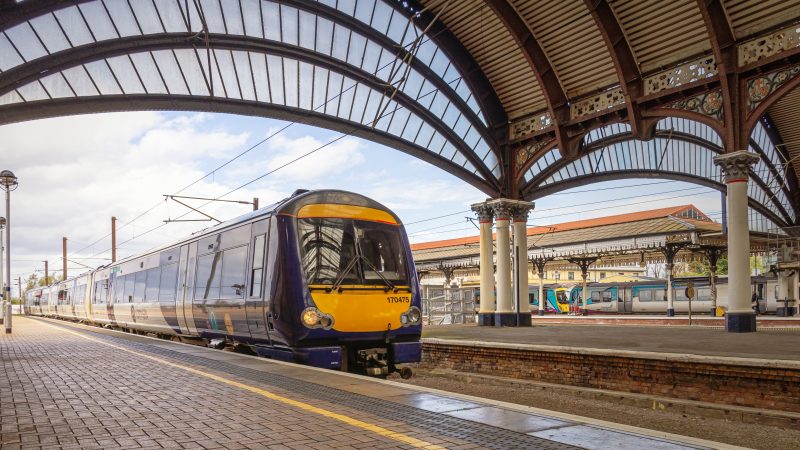

Great British Railways (GBR) is the biggest shake-up of the rail network in 30 years. While the Railways Bill (currently waiting to come back to the House of Commons from committee) will bring GBR into being, the move to public ownership is already underway. Eight Train Operating Companies (TOCs) currently sit in public hands. The rest will follow by 2027.
Yet so far, for transport workers, the transition has left a lot to be desired.
To be clear, my union has campaigned for public ownership of the railways ever since privatisation in the early 90s. A publicly owned railway makes sense, combining track and train under one “guiding mind” to deliver a transport system fit for everyone. GBR should be the engine that drags the rail network into the 21stCentury, upgrading infrastructure, reducing and rationalising ticket prices, and bringing accountability to services.
Our longstanding support shows that we want GBR to succeed, but in practice the movement to the new structures has meant a litany of stark challenges for TSSA members: potentially thousands of job losses; attacks on travel concessions; uncertainty over pensions; a lack of transparency; and, in one case, even derecognition of trade unions in advance of the transfer.
READ MORE: ‘How do we transform our nation? It’s written on our membership cards’
Before last year’s Spring fiscal event, anonymous sources at the DfT suggested there could be 1000s of redundancies in the transition. We were offered assurances that this wasn’t the case and yet, a year on, so-called “efficiencies” at Network Rail mean that 870 people face losing their job. Similarly, there are now slated job losses at Southeastern, where the transition is already in full swing with an “alliance” between the TOCs and sections of Network Rail’s southern region.
We are clear that at a time when we should be expanding investment in rail services and infrastructure to grow and green our economy, it is flatly wrong to suggest there should be job losses in the sector; the opposite is true. TSSA is fighting to protect all jobs in the transition.
Where new structures are created, there is often little transparency about what they will look like or how they will bridge into GBR. For example, while the transfer itself from C2C to the Department for Transport Operator was relatively straightforward, the subsequent announcement of ‘Anglia Railways’, which integrates C2C, Greater Anglia and Network Rail was not raised in the TUPE negotiations. We would argue that a failure to share this information breaches TUPE laws but, whatever the legal position, it is not a good way to conduct industrial relations.
Become a friend of LabourList and join our community. Our friends support our vital non-factional work and get access to exclusive content and events.
A lack of concern for trade unions has been a feature of the process. In recent responses to a question from Andy McDonald MP about setting up standard procedures for recognising and giving facility time to trade unions in the transition to GBR, the Minister replied with a simple one-line answer: ‘recognition of trade unions and provision of facility time is a matter for train operating companies as employers’. Given the Government’s plans for publicly owned passenger rail services, we would strongly disagree.
Recent transfers make this especially concerning. In the TUPE from Network Rail into Platform 4 – a wholly owned subsidiary of Network Rail – trade unions have been de-recognised because the new (publicly owned!) company ‘does not currently recognise any trade unions for collective bargaining purposes’. As the Government is consulting on strengthening access and recognition rules mandated by the Employment Rights Act, and when its Make Work Pay agenda spells out the value of trade union recognition, it is unacceptable for Ministers to shrug their shoulders of responsibility for these issues.
Despite insisting austerity is over, the backdrop to the transition is DfT cuts; 1% for infrastructure and 5% to day-to-day spending across the 5-year Spending Review period. Perhaps that is why the Government has been unwilling to place pension protections for workers on the face of the Railways Bill.
There is nothing new in this proposal. In 1993, the Conservative Government did it in the move from public to private ownership. Workers on the Railway Pension Scheme who joined before privatisation had their pensions protected. The same is not now being offered from a Labour Government.
We need a different approach. Instead of cuts to DfT spending envelopes and piecemeal projects announced at politically expedient times, we need investment in a thought-out, long-term plan for the growth of passenger and freight rail services. That would boost growth in our economy, green our transport system, and connect our communities.
Subscribe here to our daily newsletter roundup of Labour news, analysis and comment– and follow us on TikTok, Bluesky, WhatsApp, X and Facebook. You can also write to our editor to share your thoughts on our stories and share your own. The best letters are published every Sunday.
GBR should drive that work forward, but that means creating jobs – not cutting them – and a just transition for the workers already in the sector, protecting pay, pensions, and travel concessions in the move to public ownership. We want GBR to succeed; to do that, it must work for everyone – passengers and transport workers.



More from LabourList
Letters to the Editor – week ending 11th October 2026
‘Playing it safe on Europe is the riskiest thing Labour can do’
‘Jack Charlton and Labour’s rural tradition’