

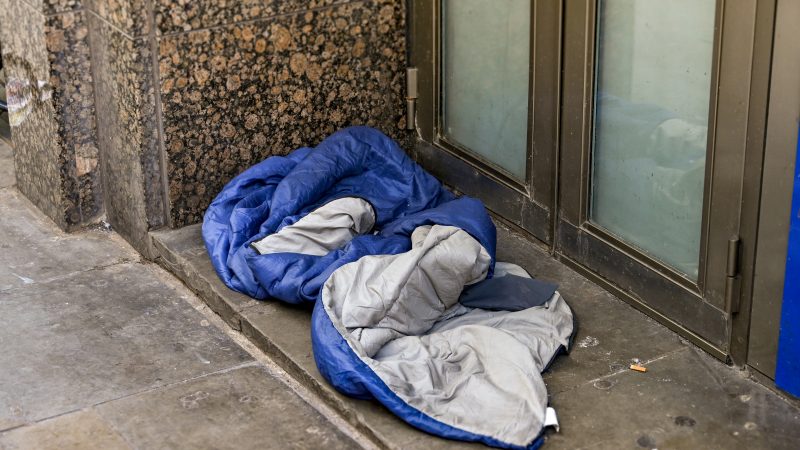

Sometimes things really do get better. Here in London, after so many years of austerity, and with local government reeling following years of gross underfunding, it is heartening to be able to oversee positive change. And this is one story that reminds me, and hopefully you, that what we do and what we fight for is never for nothing.
Almost a year ago now, I walked out of the local Morrison’s into the busy streets of Wood Green in north London. It’s a short hop from Haringey Council’s central offices. Amongst the hundreds of people rushing about, spilling from buses, navigating the busy pavements – a woman was standing uneasily, belongings strewn around her, clearly unaware of her surroundings, clearly very distressed and clearly alone.
We’ve had a homelessness and rough sleeping crisis in London for more than a decade now. Seeing distressed, unwell people on the street isn’t an unusual sight, generally my heart sinks, aware of the chronic shortage of intensive mental health support and an entrenched pessimism that help is not there for people like Marie (not her real name) when needed most.
READ MORE: ‘The battle for London’s future’
Seeing so much around us that is broken, I know a lot of people who have given up. Some in politics, some in the civil service.
I’m in the local Cabinet in Haringey and lead on homelessness and rough sleeping, I haven’t given up.
Sometimes nonsense is spoken – like that Marie and people like her are ‘choosing this lifestyle’ and unlikely to respond or change. That kind of institutionalised pessimism is incredibly destructive, designed to alleviate guilt, and I’m afraid more common than it used to be.
In Haringey we acknowledge that housing and health are intrinsically linked – we’ve organisationally put them together. Already we are fortunate in having a first-rate homelessness team and with health now sitting alongside, we are seeing directly improved outcomes for some of our most vulnerable residents.
I say ‘lucky’. But many people actively built the team because tackling homelessness is a key priority. While rough sleeping has gone up just about everywhere in London, here it’s halved.
I reported to the team that I’d seen a woman who needed urgent help, and let them know just how unwell she might be. They didn’t raise any eyebrows or tell me it wasn’t my job to get involved or condescendingly start managing my expectations. Instead, straight away they sent a street outreach worker.
There’s a reason why we shouldn’t assume anything about why someone is rough sleeping. It’s rarely simple. What emerged as our team started talking to Marie was a web of social problems – none of them her own making – that she was caught in the middle of.
It turned out that Marie had a council home in Tottenham. She was also on council records for a mental health issue, for which she took medication. She hadn’t been seen by mental health services for some time and – as can happen with patients who self-administer – she had stopped taking her regular dose of medication.
Become a friend of LabourList and join our community. Our friends support our vital non-factional work and get access to exclusive content and events.
One of the tragic facets of modern life is that there are people who look out for this sort of thing, vultures who see an opportunity to exploit someone’s mental state. A man had inveigled his way into Marie’s council flat – and was quickly ensconced. This is what’s known as ‘cuckooing’ and although Marie’s decision-making was disturbed without medication, she knew it wasn’t safe for her to be home anymore and so she sought sanctuary on the streets.
This is the point at which Haringey’s local public services kicked in. There were health, care, housing and crime issues to solve – all at the same time. Our homelessness team led things, making sure a mental health assessment happened, setting up supported housing and bringing in the wraparound support for rough sleepers that Haringey’s Mulberry Junction offers daily. The person who was ‘unlikely to respond’ started visiting Mulberry Junction every day, checking in with support workers and gradually, steadily, visibly, stabilising again. Once well enough Marie moved into a new placement on the other side of London away from the man she was rightly afraid of and into a safe new home – again arranged by our team.
The police visited Marie’s old council flat several times. They found and arrested the man who had seized her home – he has been charged and is currently awaiting trial. Meanwhile, Haringey’s own antisocial behaviour team secured the flat to stop anyone else from going after the vacated property.
Subscribe here to our daily newsletter roundup of Labour news, analysis and comment– and follow us on TikTok, Bluesky, WhatsApp, X and Facebook. You can also write to our editor to share your thoughts on our stories and share your own. The best letters are published every Sunday.
It took collaboration across multiple departments and organisations to do this. These coordinated actions turned someone’s life around. Someone who was homeless and in immense danger is now safe and has a home.
There are plenty of times when jadedness at the world and its troubles gets to me, as it gets to all of us. But, actually, sometimes, with the right will, attitude and people, things really do get better. And none of us should forget it.



More from LabourList
‘The zero-emission vehicle mandate is a major climate test for Burnham’
‘Reopening the Brexit debate would be a mistake’
‘The message from Labour Conference is clear: we must get SEND reform right’