

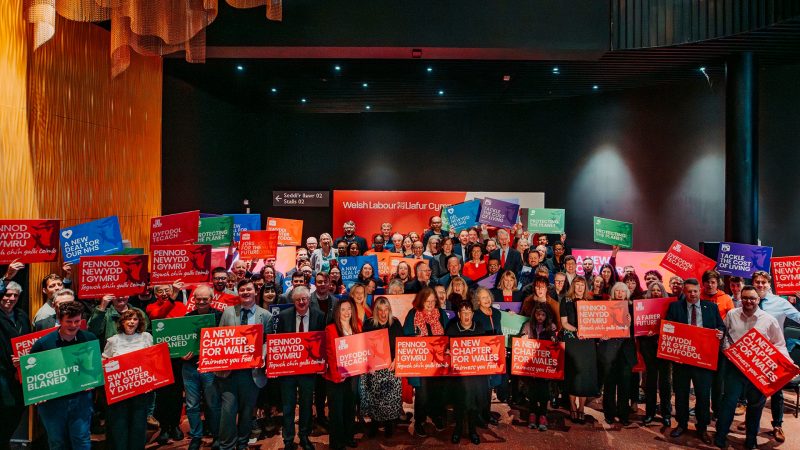

The Senedd elections results are a disaster for Welsh Labour and a warning to UK Labour that politics is changing and that we must change direction.
For the past 27 years of devolution Welsh Labour has been the majority party in Wales, but our demise was predictable and longstanding but not inevitable. There are fundamental lessons to be learned and there are ominous warnings for UK Labour as we approach the halfway stage of government in Westminster.
There will be much debate about the reasons for this disastrous result. The blame game has already begun. Delivery of public services, educational attainment, NHS waiting lists and so on, all of which have some validity and are a factor but do not go to the root of the failure. There is much to be analysed about the Welsh results and the campaign but there is no doubt that the election was dominated by events in Westminster and reflected that. In the past Welsh Labour was able to withstand this and regularly polled 5% above the UK Labour vote. Not this time and Scottish Labour, who have not been in government for nearly 20 years, suffered the same fate.
READ MORE: How will Welsh Labour elect a new leader?
2021 was a high point for Welsh Labour which has never had a majority in the Senedd and has always had to govern in partnership with others. Winning 30 of the 60 seats was its best performance ever. The General election in 2024 raised high expectations that the disastrous 14 years of Tory austerity and muscular unionism would come to an end.
However, the new dawn failed to materialise.
The roots of Labour decline in Wales align symbiotically with the decline of its political foundations in heavy industry, mining and steel and the formation of tight knit valleys communities. As time has gone on, the hard-core Labour vote has become smaller, and the softer and more diverse centre left vote has grown.
Despite this, the emergence of Welsh Labour – standing up for Wales – built a coalition of value-based centre left political support. An alliance of traditional labour voters, but also those supportive of devolution, increased powers for Wales, and a stronger Welsh identity within the UK. In an environment where there has been a gradual increase in support for some sort of independence. Analysis of the last Senedd elections revealed that around 50 percent of those supporting independence for Wales nevertheless supported Welsh Labour as the best way of promoting Welsh interests. “Standing up for Wales” resonated with this values-based centre left vote.
First Ministers Rhodri Morgan, Carwyn Jones and Mark Drakeford all promoted and developed this identity, buoyed by a clear red water principle. A committed and integral part of the UK but a nation of equals. A UK with four parliaments in partnership. Where our interests diverge, devolution enables Welsh Labour to always stand up for the interests of the people of Wales.
14 years of Tory austerity and muscular unionism consolidated the success of Welsh Labour.
Success in the General election of 2024 heralded a new dawn and an opportunity for progress of the aspirations of the Welsh Labour Government for constitutional, financial and economic reform. Those aspirations failed to be realised.
The demise has roots which go back much deeper and will need detailed analysis which goes beyond the space available in this article. After the success of Keir Starmer’s leadership bid there was a belief that there would be fundamental constitutional reform. Gordon Brown was commissioned to produce a report which recognised the serious decline and threat to our democratic institutions arising from political distrust and disengagement but also recognised the importance of growing regional identity and the need for greater decentralisation and devolution.
Except for some of the proposals for England it has largely been abandoned.
- Abolition of the Internal Market Act abandoned;
- Little progress on discussions for a reformed ‘needs based’ financial formula for Wales;
- A reversal of support for HS2 rail consequential funding;
- No progress on the devolution of youth justice and probation;
- Rejection of calls for the devolution of the Crown Estate;
- Abandonment of proposals for the abolition of the House of Lords and the creation of a Council of the regions and nations of the UK;
Virtually none of the expectations for reform set out in various commissions and policies have been delivered or even progressed. Instead there has been a continuation of the muscular unionism of the predecessor Tory Government.
Alongside this, UK Labour is becoming increasingly British unionist and centralist politically and structurally, with a Welsh office as the voice of UK Government in Wales – an increasingly colonial governorship rather than a partner to the Welsh devolved Government. Politically this has meant the disassembling and sterilisation of the successful Welsh Labour identity.
Britishness may go down well in England, but in Wales all the evidence is increasingly that those on the centre left of politics identify as Welsh rather than British.
Some of the most sophisticated analysis of electoral performance and intentions has been developed over the years by the Welsh Governance Centre. It goes well beyond much of the transient and superficial polling that usually makes the news headlines.
In this election, of course Welsh Government performance played a part, but a relatively peripheral part. In all but name this was a referendum on the UK Government and the leadership of Keir Starmer. The growth of Reform in Wales is like that across most of England. Wales is now a six-party country only with a fully proportional voting system. Alliances and partnerships are the politics of the future. In Wales the Welsh Labour agenda has been replaced by a “ two governments working together” mantra, which either was not believed or which, in practice, reduced the perception of Welsh Labour to an appendage of an increasingly unpopular and centralised UK Labour Government.
Scottish Labour, despite efforts to distance itself and not being in government for 14 years, has suffered a similar fate.
Winning only 9 of the 96 Senedd seats is a historic disaster. It has the potential to become a ground zero existential result. I think this is unlikely and certainly not inevitable. However, much will depend on how UK Labour and Welsh Labour respond and the Welsh Labour conference in November will be crucial.
There needs to be a root and branch analysis of what is the worst Welsh result in a century, with probably the weakest campaign in my living memory of 52 years membership. So many long-standing members have left and abandoned the party. There was a lack of any clear and consistent messaging or identity and a total failure to learn the lessons of Scotland back in 2007. As a member of the Labour National Executive Committee, despite the successful results in the Senedd elections, I warned that we were nevertheless on the coat tails of Scottish Labour, and we could not take continued success for granted. The warning was ignored. Not only that, we went in the exact opposite direction that the electoral evidence was telling us. We lost our Welsh Labour identity and the confidence of the people of Wales that we were their champions and their voice.
When it came to the challenge from Reform, too many months of trying to “out Reform” Reform opened the door to Plaid Cymru to present themselves as their main opposition. By the time we changed the message it was too late. The two major motivators for the centre left coalition of ‘Standing up for Wales’ and ‘defeating Reform’ became owned by Plaid Cymru. Our alternative and anodyne ‘two governments working together’ barely resonated with the public mood.
As a party we failed the test. We cannot blame the electorate. It is our failure and we must take ownership of it. If we are to reverse this disaster we must build for the future, and this requires fundamental change.
Welsh Labour must become an autonomous party in Wales, part of the Labour family but independent and always standing up for Wales. In government we must put the inter-governmental framework on a statutory basis.
If we cannot do this then we will not convince future generations of voters of our ability to genuinely stand up for Wales. We open the door to the break-up of the UK. The emergence of three nationalist governments in the UK is the start of that process, and it is a process of our own making.
At UK level, Labour must recognise the new political environment we are in. There are three years to go before the next general election and Council elections will take place in Wales next year. It must respect the democratic result and that must mean constitutional reform along the lines of the recommendations of the Gordon Brown report. Failure to do so will lead to further disaster at the next general election. ‘Country before party’ must take priority.
We must also confront the idea that, fairly or unfairly, Keir Starmer cannot lead the party into the next election. An immediate leadership contest would risk economic and political instability at a calamitous global moment, but equally the party cannot ignore the damage that has been done. A managed and orderly transition is needed. That requires a clear plan and a democratic leadership contest capable of rebuilding public trust.
The next few years may determine not only the future of Labour in Wales, but the future direction of progressive politics across Britain. The challenge now is not simply electoral recovery. It is whether Labour can rediscover a sense of purpose and hope strong enough to reconnect with the people it was founded to represent.
Become a friend of LabourList and join our community. Our friends support our vital non-factional work and get access to exclusive content and events.
Subscribe here to our daily newsletter roundup of Labour news, analysis and comment– and follow us on TikTok, Bluesky, WhatsApp, X and Facebook. You can also write to our editor to share your thoughts on our stories and share your own. The best letters are published every Sunday.
-
- SHARE: If you have anything to share that we should be looking into or publishing about this story – or any other topic involving Labour– contact us (strictly anonymously if you wish) at [email protected].
- SUBSCRIBE: Sign up to LabourList’s morning email here for the best briefing on everything Labour, every weekday morning.
- BECOME A FRIEND: If you enjoyed this, why not consider becoming a Friend of LabourList? Help sustain our journalism, and of course Friends do get benefits…
- PARTNER: If you or your organisation might be interested in partnering with us on sponsored events or projects, email [email protected].
- ADVERTISE: If your organisation would like to advertise or run sponsored pieces on LabourList‘s daily newsletter or website, contact our exclusive ad partners Total Politics at [email protected].



More from LabourList
‘Back Burnham over Brexit’
Delivering in local government: How Labour is building a better Britain everywhere
‘Changing our voting system is fundamental to Burnham’s agenda’