

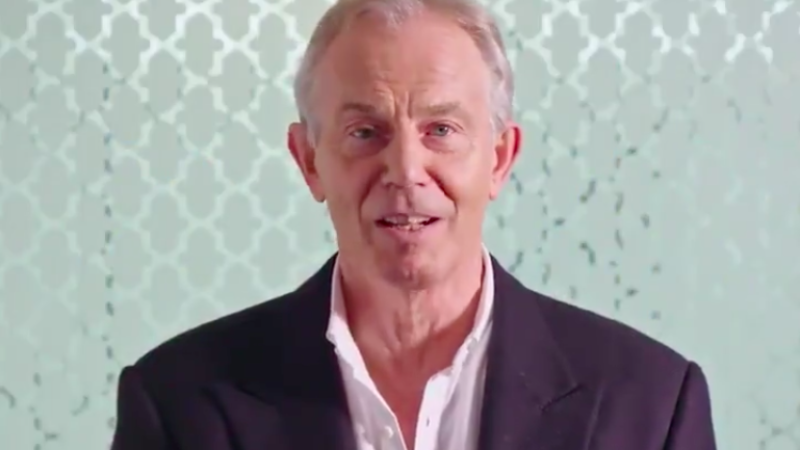

He’s at it again. Tony Blair has decided to intervene. At a moment when Labour is struggling politically, he has chosen not to steady the ship, but to fire shots at those on board. What a day for LabourList to reveal he still polls as Labour members favourite leader.
His latest essay argues “The Labour Party is playing with fire; or, more accurately, with its future, and that of the country.” It is a dramatic warning, delivered with the certainty that often accompanies Blair’s political interventions. Yet it raises an obvious question: who exactly benefits from this contribution?
Certainly not this Labour government.
READ MORE: Tony Blair’s essay: Where does he clash with current Labour policy?
Blair criticises some of the policies ministers feel proudest of pursuing. He warns Labour risks governing from a “traditional Labour ‘soft left’ position” and says voters will not forgive economic decisions that appear hostile to growth. He attacks aspects of net zero implementation, suggests Labour has mishandled business confidence, and insists the government lacks “a worked-out, coherent plan”.
None of that lands gently on ministers and MPs already battling difficult polling and public frustration.
To be fair to Blair, he is right about one thing. Politics has always been more complicated than simply changing a leader. Personality matters, but governing competence, economic credibility and public confidence matter too. Labour supporters should resist simplistic explanations for electoral problems.
However, Blair’s analysis also feels frozen in time. His greatest political battles occurred well before modern social media ecosystems shaped political conversations daily. New media rewards personality and emotional connection far more ruthlessly than traditional campaigning ever did. Blair never governed under those pressures as a frontline politician.
So does he really understand the country he thinks he is addressing?
Still, if we follow Blair’s argument to its logical conclusion, almost nobody in Labour emerges looking adequate.
Keir Starmer appears implicated through Blair’s criticism that Labour lacks direction and strategic clarity. Blair also includes criticism of Britain’s military positioning over Iran arguing we should be closer to Donald Trump.
Andy Burnham hardly benefits either. Blair explicitly warns against drifting leftwards politically, but many supporting Burnham are hoping he may provide in a future leadership bid.
Wes Streeting is also implicated through wider criticism of economic positioning and the effect on investor confidence. This is particularly due to arguments Streeting has made around capital gains taxation. Rachel Reeves appears targeted indirectly through criticism of measures including minimum wage increases and changes affecting non-doms.
Ed Miliband receives perhaps the clearest implied rebuke. Blair openly questions the government’s approach to net zero and argues phasing out oil and gas too rapidly risks political damage. Angela Rayner’s workers’ rights agenda also sits uneasily beside Blair’s warning against appearing economically ideological.
So again: who benefits?
Blair closes his critique by advancing a ten-point “radical centre” agenda. Yet reading it, cynics may reasonably conclude the people most likely to gain are those who already share the Tony Blair Institute worldview. Call me cynical, but this risks looking less like constructive criticism and more like an attention-grabbing intervention, delivered while Labour already fights challenging political headwinds.
From a former Labour Prime Minister, many of us expect better.
And yet, despite my frustration with Blair’s approach, his central diagnosis should not simply be dismissed.
Become a friend of LabourList and join our community. Our friends support our vital non-factional work and get access to exclusive content and events.
I disagree with him on substance in several areas. Supporting workers rather than businesses should never become controversial inside Labour politics. This, for example, reflects Labour’s basic purpose: giving ordinary people a fair chance.
I also disagree that Labour looking left automatically represents political failure. Yes, Labour has been losing seats to Reform on the right. But the Greens continue splitting progressive support on the left, helping fragment our base while the right consolidates. The answers are more complex than simply saying ‘don’t look leftward’.
Still, Blair’s wider criticism lands because the context of the existential crisis we are in as a Party makes it difficult to ignore.
Labour may have policies. The King’s Speech demonstrated that much. What Labour perhaps still continues to lack is a convincing narrative connecting them together.
Government policies and narratives have felt siloed, fragmented and difficult to explain.
That is playing with fire. Blair may be unhelpful. His preferred answers may feel self-justificatory and out of step with the country as it is in 2026. But his warning about Labour’s broader problem is not entirely wrong.
Subscribe here to our daily newsletter roundup of Labour news, analysis and comment– and follow us on TikTok, Bluesky, WhatsApp, X and Facebook. You can also write to our editor to share your thoughts on our stories and share your own. The best letters are published every Sunday.
-
- SHARE: If you have anything to share that we should be looking into or publishing about this story – or any other topic involving Labour– contact us (strictly anonymously if you wish) at [email protected].
- SUBSCRIBE: Sign up to LabourList’s morning email here for the best briefing on everything Labour, every weekday morning.
- BECOME A FRIEND: If you enjoyed this, why not consider becoming a Friend of LabourList? Help sustain our journalism, and of course Friends do get benefits…
- PARTNER: If you or your organisation might be interested in partnering with us on sponsored events or projects, email [email protected].
- ADVERTISE: If your organisation would like to advertise or run sponsored pieces on LabourList‘s daily newsletter or website, contact our exclusive ad partners Total Politics at [email protected].



More from LabourList
‘Playing it safe on Europe is the riskiest thing Labour can do’
‘Jack Charlton and Labour’s rural tradition’
Labour triumphs against Polanski, but the Green threat remains