

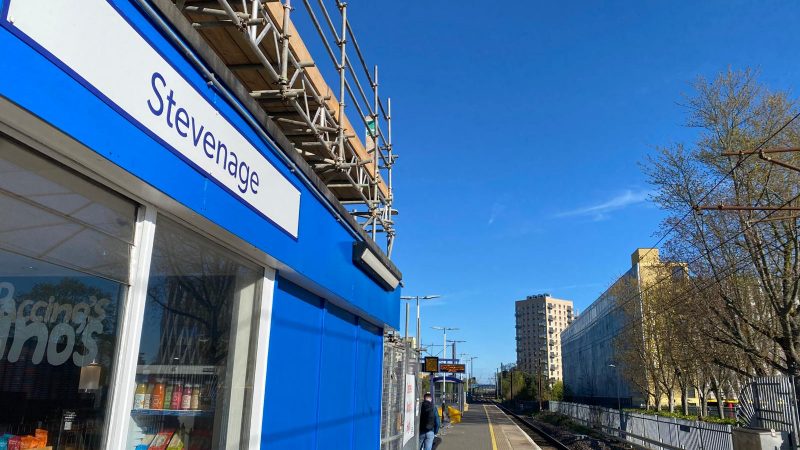

The constituency of Stevenage has been a bellwether since its creation in 1983, quietly blazing a trail for national politics as it has for town planning. “Stevenage Woman” was to Keir Starmer what “Mondeo Man” was to Tony Blair – the swing voter critical for victory.
Starmerite think tank Labour Together coined the archetype pre-election, describing a “young mother struggling with the cost of living and disengaged by politics”. It reportedly typifies a wider “disillusioned suburban” demographic found in many traditionally marginal seats. Labour’s ruthless targeting paid off, with a 6,618-vote majority in Stevenage mirroring its landslide.
Almost two years on, it begs the question: what do the women of Stevenage make of Keir Starmer now? Just how many are warming to the likes of Polanski – or even Nigel Farage?
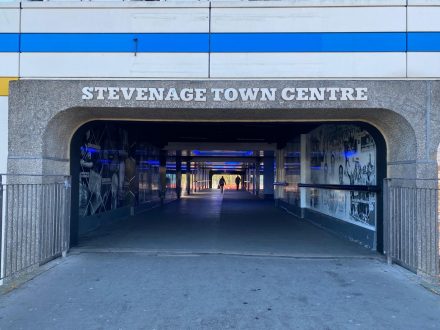
Disillusioned suburbia
Strikingly, only one Stevenage woman I spoke to all day was backing the Greens. Most are distrustful of politicians, and disengaged from politics entirely. Starmer’s U-turn habit comes up repeatedly, and far more so than specific policies. Few women have even heard of Zack Polanski. Labour’s coalition appears to be fracturing – but less toward alternatives than alienation.
Overcoming such disenchantment and detachment looks a herculean task for all parties. Many voters may well be crying out for policies to raise living standards – like Polanski’s recent pledges on the “affordability crisis”, Starmer making it top priority this year, or Badenoch’s fuel duty campaigning. But they may well also not notice policies and promises enough to shift their votes.
Labour began rolling out once-in-a-generation workers’ rights upgrades this year, but I found little awareness – albeit perhaps unsurprisingly given the government’s Brownite socialism by stealth.
READ MORE: ‘Don’t do it as a protest vote’: Can Labour survive a Green wave in Cambridge?
A Labour source suggests voters know councillors are helping keep green spaces “in good order”. My sample was small, but I didn’t see it myself. And gratitude is not votes.
Housing hot potatoes
For the most part, housing is a toxic issue here. Local Labour efforts to regenerate central Stevenage, partly through new homes, seemingly arouse as much hostility as thanks. It’s hard not to feel for councillors navigating declining high streets and budgets, but easy to understand residents’ wariness. The first thing you pass arriving from Stevenage station is a giant building site, with a scaffolded tower block looming large over a sad, near-empty square.

It’s the first step in transforming a central area Labour admits looks “unwelcoming and dated”. Yet in the meantime regeneration means yet more empty units, and the whirring of saws and clanks of metal on metal as an everyday soundtrack. “22 minutes from central London,” an ad boasts on the fencing, which encapsulates local unease. There’s a sense new homes are only for newcomers, only drawn here by how easy it is to escape. Meanwhile the speed of the commute means property prices here are almost £50,000 above the national average.
Other housing issues have cut through, but for the worse for Labour. The council’s decision to slash 2,000 applications from its housing waiting list last year still sparks more attention than new-build social housing. Two asylum hotels compound suspicions existing residents come last, regardless of council myth-busting and efforts to shut one. Polanski’s recent attacks on Labour councils “in hock to developers” may find a receptive audience here.
What election?
One sign of just how alien politics has become here is how few visible signs there are of election season. I don’t see a single rosette or garden stake in two key wards. Even Stevenage Labour’s old town centre office lies empty, plastered only with red marketing posters for a new 10-story apartment block.
Become a friend of LabourList and join our community. Our friends support our vital non-factional work and get access to exclusive content and events.
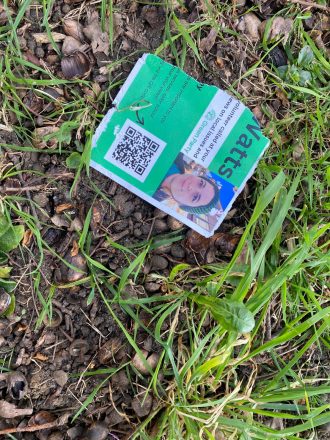
The only literature I see is a torn fragment of a Green leaflet, as I cut through another maze of ageing post-war low-rise blocks. I’d seen the leaflet online, and found it revealing about Green strategy. Far from the eco-populism energising members, public-facing politics on the ground looks much like most local politics – resolutely micro and mundane. The literature focuses on fly-tipping, speeding, damaged playgrounds and roadsigns, clearly judging tangible change trumps all else – much as Labour belatedly has with its Pride in Place scheme.
Radical young women
Whatever the strategy, Polanski seems at first glance to be pushing at an open door with Stevenage Woman. Well-funded targeting helped Starmer win two in 5 women under 45 in 2024. But one in five under 24 voted Green, and one in seven aged 25 to 34. Little reported then, Westminster is increasingly waking up to the fact many young women are “moving to the radical left”, as recent polling showed.
Yet stark class divides in said polling tell a different story. Middle-class women were more negative about the economy, capitalism and their own lives than working-class counterparts. Separate recent polling shows Green membership becoming younger and more female, but also more financially secure. Green candidates I interviewed were notably all working-class, but with middle-class progressives typically concentrated in bigger cities, the Greens’ best hope nationally may be more Southwark Woman than Stevenage Woman. And it suggests the Green tide must become a tsunami to make serious gains under first-past-the-post. 2024 yielded 7% of the vote, but 0.7% of seats.
As for Stevenage, the Greens’ exponential growth in MRP vote share and membership is partly exponential because of their low base, too. One day, the growing number of more Green-friendly, middle-class London overspill commuters could outnumber the descendants of the postwar working-class overspill – but we’re not there yet.
Recent constituency and council MRPs put local vote share at 11%, almost half Labour’s tally. Labour folk are sceptical about local projections partly based on national data. “Applying national polling to conjure the illusion of a Green surge… is nothing more than a cheap hypnotist’s trick,” a Stevenage Labour spokesperson tells me.
Reform or boredom?
What of Reform, though? I find little love for them among women, including ones concerned about small boats.”
Reform’s triumph in County Council elections here last year suggests they remain Labour’s main challenge, however, perhaps in a disproportionately male revolt. With MRPs putting Reform well ahead here, a teal clean sweep is no longer unthinkable, even if it feels unlikely. It would end a half-century of Labour majorities.
Labour’s ‘two-horse race’ squeeze seemingly worked in a recent by-election here, unlike in Gorton or Caerphilly. “The only impact the Greens can have is to split the progressive vote, and hand Residents a Reform councillor,” a local Labour spokesperson warns now.
Yet many women say they won’t vote Labour again, either. “We thought Labour were a safe bet, but aside from Truss, Starmer’s probably the worst prime minister we’ve ever had,” says one who spoke to me.
Subscribe here to our daily newsletter roundup of Labour news, analysis and comment– and follow us on TikTok, Bluesky, WhatsApp, X and Facebook. You can also write to our editor to share your thoughts on our stories and share your own. The best letters are published every Sunday.
It’s worth remembering even a Starmerite think tank predicted Stevenage Woman simply wouldn’t engage, let alone decide, until “close to election day” in 2024, regardless of Labour campaigning and Tory unpopularity. For most real Stevenage women I spoke to – some of those supposedly holding the keys to Downing Street – the most likely decision on May 7 doesn’t seem to be voting for Labour or their main rivals. It’s simply not voting at all.
-
- SHARE: If you have anything to share that we should be looking into or publishing about this story – or any other topic involving Labour– contact us (strictly anonymously if you wish) at [email protected].
- SUBSCRIBE: Sign up to LabourList’s morning email here for the best briefing on everything Labour, every weekday morning.
- BECOME A FRIEND: If you enjoyed this, why not consider becoming a Friend of LabourList? Help sustain our journalism, and of course Friends do get benefits…
- PARTNER: If you or your organisation might be interested in partnering with us on sponsored events or projects, email [email protected].
- ADVERTISE: If your organisation would like to advertise or run sponsored pieces on LabourList‘s daily newsletter or website, contact our exclusive ad partners Total Politics at [email protected].



More from LabourList
Letters to the Editor – week ending 11th October 2026
‘Playing it safe on Europe is the riskiest thing Labour can do’
‘Jack Charlton and Labour’s rural tradition’