


As Andy Burnham prepares to enter Downing Street, I want to be clear about why I am backing him – and why he should put the impact economy not at the margins of the change the country needs, but at its heart. “Manchesterism” may not be a phrase he coined himself or that fully reflects his ideology, but it captures something real: a governing philosophy built on the belief that markets must serve people, that communities know their own needs best, and that the old binary between public sector delivery and private profit is a false choice.
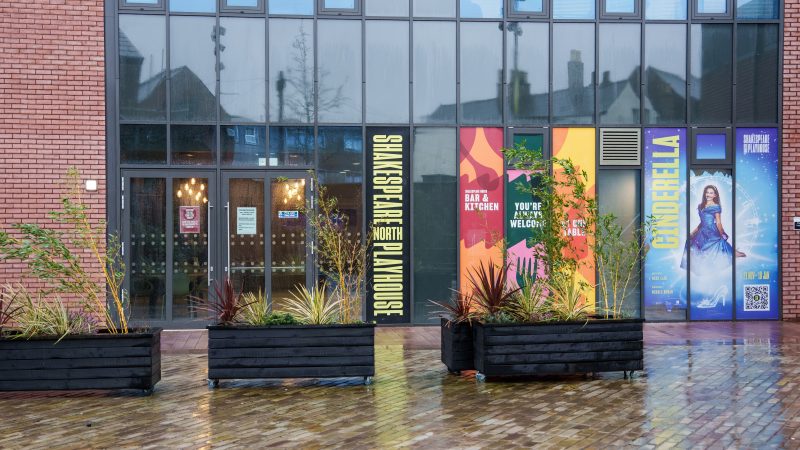
I grew up in Prescot, a small town in the Liverpool City Region that knows what happens when the economy turns its back on a community. The closure of the cable and wire industries in the 1980s hollowed out the town – not just the jobs, but its confidence and civic identity. For years, Prescot drifted. What turned it around was not a government scheme handed down from Whitehall, nor a private developer chasing returns. It was the patient energy of local people and organisations – social enterprises, community groups, cultural institutions – who refused to accept that their town’s story was finished. That work culminated in something remarkable: the Shakespearean North Playhouse, run by a Community Interest Company, the most significant Shakespearean theatre since the reconstruction of Shakespeare’s Globe, brought to life by a community that had learned to back itself. Prescot is now a cultural destination. It happened because social enterprise creates the conditions for a community to rediscover its own agency. Today I represent Southport, a coastal town with its own proud history and determination to shape what comes next – and I see in it the same potential that local people unlocked in Prescot.
READ MORE: Paul Nowak Column: ‘An ambitious programme for the first 100 days’
That experience shapes everything I think about the impact economy – and why Andy Burnham’s talk of an end to the economics of the last forty years represents such a significant opportunity.
The power of the impact economy – social enterprises, community businesses, impact investors, philanthropic funders, and the infrastructure connecting them – has long been underestimated. Burnham’s mayoralty demonstrated why that view is mistaken. Greater Manchester has shown that purpose-driven organisations can be effective partners in addressing rough sleeping and economic exclusion, though generally integrated into a public-sector-led model rather than serving as the central organising principle of the city-region’s economic strategy. There is an opportunity now to go further and empower regions to bring the impact economy into the heart of their processes, combining the discipline of business with the mission of public service.
One example is the Greater Manchester Better Outcomes Partnership (GMBOP) homelessness programme. Rather than relying on traditional grant funding, it brought together social investors, specialist providers, and public sector commissioners around a shared outcome: reducing youth homelessness. The results have been striking – improved housing, wellbeing and employment outcomes, and significantly better value for the Greater Manchester Combined Authority.
Keir Starmer’s Government has laid important groundwork for where this approach could go next, working in partnership with the sector. The £500 million Better Futures Fund, which will radically improve the life chances of young people through blended public and private capital, marked a genuine step change in how central government thinks about prevention and social impact investment – built, in part, on the work of social investors like Better Society Capital. The establishment of the Office for the Impact Economy gave the sector a coherent home in government for the first time. These are real achievements, and a Burnham Government has the chance to take that base and do something genuinely transformative with it.
Become a friend of LabourList and join our community. Our friends support our vital non-factional work and get access to exclusive content and events.
But if the Starmer years have been about laying the foundations for something better, the Burnham era should shift the centre of gravity. His political career over the last decade has been shaped by a conviction that the people closest to a problem are best placed to solve it.
As Chair of the Social, Cooperative, and Community Economy APPG, I have seen the frustration of organisations that have the models, the track record, and the community relationships, but cannot access the capital or commissioning frameworks to scale. Our cross-party work has repeatedly heard from those facing them: procurement rules that favour large incumbents, funding timelines that are too short, and a lack of the patient, relational finance found in social impact investment. A Burnham Government with devolution at its core has a real opportunity to dismantle those barriers systematically – and it could begin quickly, without new legislation or significant new spending.
The impact economy is not a substitute for properly funded public services and works best as part of a mixed ecology rather than a cost-cutting mechanism. But as part of a serious social and industrial strategy, the tools this sector has developed over decades – social outcomes partnerships, match funding, blended finance and community shares – can unlock resources for places and people that conventional markets ignore.
Prescot is proof of what becomes possible when you back communities to lead their own renewal. There are hundreds of towns across England waiting for the same chance. The foundations have been laid. The question now is whether a Burnham Government will have the ambition to build on them. Those who have admired his work in Manchester believe it will.
Subscribe here to our daily newsletter roundup of Labour news, analysis and comment– and follow us on TikTok, Bluesky, WhatsApp, X and Facebook. You can also write to our editor to share your thoughts on our stories and share your own. The best letters are published every Sunday.
-
- SHARE: If you have anything to share that we should be looking into or publishing about this story – or any other topic involving Labour– contact us (strictly anonymously if you wish) at [email protected].
- SUBSCRIBE: Sign up to LabourList’s morning email here for the best briefing on everything Labour, every weekday morning.
- BECOME A FRIEND: If you enjoyed this, why not consider becoming a Friend of LabourList? Help sustain our journalism, and of course Friends do get benefits…
- PARTNER: If you or your organisation might be interested in partnering with us on sponsored events or projects, email [email protected].
- ADVERTISE: If your organisation would like to advertise or run sponsored pieces on LabourList‘s daily newsletter or website, contact our exclusive ad partners Total Politics at [email protected].


More from LabourList
Delivering in local government: How Labour is building a better Britain everywhere
‘Changing our voting system is fundamental to Burnham’s agenda’
‘Labour has a chance to make the socio-economic duty mean something’