

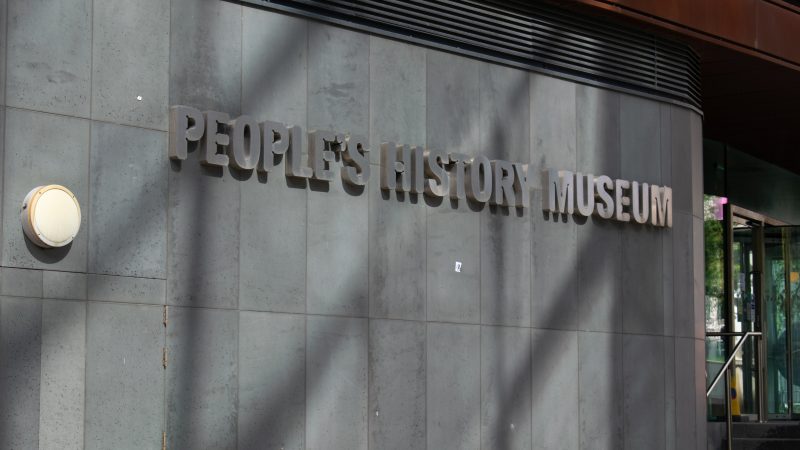

Today, at the People’s History Museum in the heart of Greater Manchester, the country’s centre of gravity shifted northwards. As Andy Burnham stood to speak, he was surrounded by reminders that this city-region’s economy once powered the country, and that its people inspired social and economic revolutions. But Manchester is focused on the future, not stuck in the past. And that much is clear given its recent economic performance, and the inspiration it is currently providing to Westminster policy makers.
The main thrust of Burnham’s speech set out a step change in devolution of power across England. Tax revenue currently flows into Whitehall departments, where it trickles down slowly through convoluted channels, only to arrive in drops on the ground. Instead, if all goes to plan, the cash will be injected straight into the places where it is needed, so they can decide for themselves. All of this will be overseen by a new expanded Number 10 operation based in Manchester.
READ MORE: Burnham sets out vision for Britain with new ‘Number 10 North’
The fact that this feels like such a revolution, shows just how embedded centralisation is: this is simply common sense asserting itself.
As it was trailed over the weekend, some people raised concerns that it might hold back London or overlook the poverty that exists – not just in the capital, but in southern towns and especially in coastal communities.
That concern is understandable. But done well, devolution means better living standards in all regions, including in London and the south.
That’s because we have two regional problems.
The first is low growth that spans the south west, Wales, the Midlands, the North, Scotland and Northern Ireland – and in many pockets in the south, especially on the coast. This has happened because places haven’t had the local power and resources to adapt to decades of industrial change. It means fewer job opportunities, with all the poverty, health and education consequences that you’d expect.
But it also means a weaker, more fragile national economy. London’s productivity is high, but it has flatlined since the global financial crisis almost 20 years ago and held back national growth. Our economy needs all its engines firing, both to reach its potential and to withstand all the shocks the global economy throws at it. Places need the power to seize opportunities, but also to pick themselves back up.
Become a friend of LabourList and join our community. Our friends support our vital non-factional work and get access to exclusive content and events.
The second problem is so obvious to many it often is regarded as a national, not a regional problem. And Burnham was also clear about this today – the extortionate cost of housing in London, due to an overheating economy where housebuilding has failed to keep up and policy has failed to manage.
These are two sides of the same coin and devolution is the way to solve both problems. The UK’s local economic investment rate is half that of France, Germany and the OECD average. They can’t spend that money because they don’t have control over it – in the UK the Treasury hoards 95 per cent of our taxes and then fails to invest in the infrastructure people need. Other countries don’t have such extreme divides because they are far more decentralised.
Transport, planning and housing are at the heart of this vision. Learning from Greater Manchester, places need both the power and resources to roll out bus franchising, take control of suburban rail routes and build new light rail systems that our major cities conspicuously lack. But it also means backing leaders in London with the powers to finance its own infrastructure, accelerate housebuilding and regulate private rents. We set out our proposals here.
Today, Andy Burnham set out an ambition and a plan. But that plan now needs to become a reality. He must hit the ground running and break the inertia of Whitehall to see this plan realised.
Manchester is rightly proud of its adopted slogan ‘we do things differently here’. If all goes to plan, then other places will start to do things differently too.
Subscribe here to our daily newsletter roundup of Labour news, analysis and comment– and follow us on TikTok, Bluesky, WhatsApp, X and Facebook. You can also write to our editor to share your thoughts on our stories and share your own. The best letters are published every Sunday.
-
- SHARE: If you have anything to share that we should be looking into or publishing about this story – or any other topic involving Labour– contact us (strictly anonymously if you wish) at [email protected].
- SUBSCRIBE: Sign up to LabourList’s morning email here for the best briefing on everything Labour, every weekday morning.
- BECOME A FRIEND: If you enjoyed this, why not consider becoming a Friend of LabourList? Help sustain our journalism, and of course Friends do get benefits…
- PARTNER: If you or your organisation might be interested in partnering with us on sponsored events or projects, email [email protected].
- ADVERTISE: If your organisation would like to advertise or run sponsored pieces on LabourList‘s daily newsletter or website, contact our exclusive ad partners Total Politics at [email protected].



More from LabourList
Letters to the Editor – week ending 11th October 2026
‘Playing it safe on Europe is the riskiest thing Labour can do’
‘Jack Charlton and Labour’s rural tradition’