

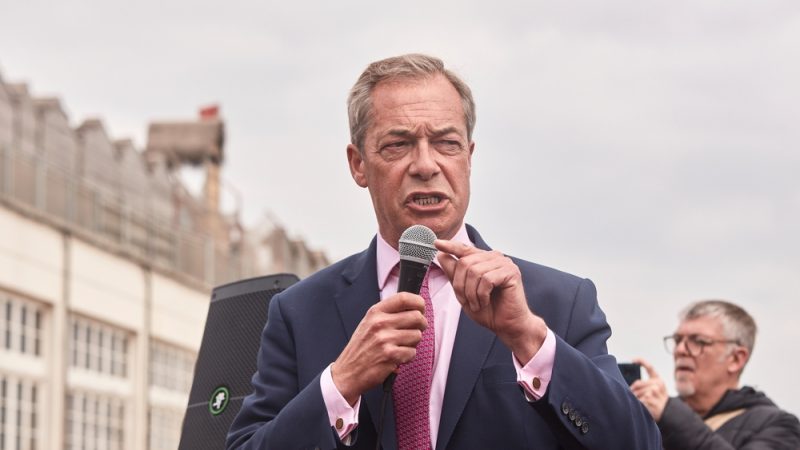

“Fanatics would always have an audience; all one might hope to influence was the size of the audience.” John Irving – The Hotel New Hampshire
As I travelled home yesterday I listened to coverage of yesterday’s PMQs and the exchange between Keir Starmer and Nigel Farage about the terrible circumstances of Henry Nowak’s death.
When I went to bed, as is my habit, I wound down by reading and was struck by the above quote.
Anyone who hears the story of what happened to Henry Nowak will feel angry. No one should have been treated the way he was. There are lessons to be learned – carefully and thoughtfully – from this incident and anger will be a prime driver that gives that process impetus.
READ MORE: ‘Dear Labour’
Righteous anger is a powerful force in politics. When harnessed well it has changed the world. Anger at injustice, anger at inhumanity, anger at the social ills of want, disease, ignorance, squalor and idleness. This anger has changed the world.
Anger though is different from rage which is what Nigel Farage has called for.
The Oxford English Dictionary describes rage as ‘A feeling of violent, intense, or uncontrolled anger’.
Violent. Uncontrolled. That is what we saw from the crowd of fanatics who descended on Southampton – against the express wishes of Henry Nowak’s family. This was the crowd of fanatics that has been expanded by the words Farage chose to use.
Words are – in reality – all we have in politics. It’s why one of the political cliches that has always most annoyed me is someone calling for ‘deeds not words’. Because political action happens through words. Words that are used to debate in Parliament. Words spoken on a rally stage or written on placards carried at a march. Words ultimately written down in law. It is words that shape our world. Words that are the tools that politicians have to do that.
Become a friend of LabourList and join our community. Our friends support our vital non-factional work and get access to exclusive content and events.
Nigel Farage knows this. We know he knows it because he is widely regarded as a skilled rhetorician and equally as a slippery one. He also makes it clear that words “written down in ink” have power.
Farage’s use of words is often hard to pin down. He usually gives himself a lot of wriggle room. He doesn’t call for violence – he just calls it understandable. Giving tacit but deniable support to those who went on to commit violence against the police and wrecked communities in Southampton. Violence he repeatedly refused to condemn when asked to several times.
Words that are missing matter too. That lack of condemnation makes it clear that while Farage may have barred Tommy Robinson from joining his party he was not condemning the convicted criminal’s rabble rousing.
While we do not have free speech laws in the UK I have always been a supporter of making sure that we are able to have robust debates. Such discussions show people who we are, what we think and what the arguments are that led us to think such things.
In using the word ‘rage’ Farage made a deliberate choice. A choice to stoke anger that is not well directed but ‘uncontrolled’. A choice to invoke ‘violence’. A choice to expand the size of the audience of fanatics.
Starmer’s response to Farage was the PM at his best. Not least because he demonstrated anger himself. But his passionate response was not undirected. Nor was it uncontrolled. In fact it was in his control that the power of his performance lay. The contrast with Farage was stark and important.
As Starmer said “Exploiting this tragedy to create grievance and division would be wrong in any circumstances. But to do it when the family are expressly saying ‘please don’t’ is unforgivable. It shows exactly who he is.”
It is Farage’s words that show us who he is. We cannot let him wriggle out of being held responsible for them.
Subscribe here to our daily newsletter roundup of Labour news, analysis and comment– and follow us on TikTok, Bluesky, WhatsApp, X and Facebook. You can also write to our editor to share your thoughts on our stories and share your own. The best letters are published every Sunday.
-
- SHARE: If you have anything to share that we should be looking into or publishing about this story – or any other topic involving Labour– contact us (strictly anonymously if you wish) at [email protected].
- SUBSCRIBE: Sign up to LabourList’s morning email here for the best briefing on everything Labour, every weekday morning.
- BECOME A FRIEND: If you enjoyed this, why not consider becoming a Friend of LabourList? Help sustain our journalism, and of course Friends do get benefits…
- PARTNER: If you or your organisation might be interested in partnering with us on sponsored events or projects, email [email protected].
- ADVERTISE: If your organisation would like to advertise or run sponsored pieces on LabourList‘s daily newsletter or website, contact our exclusive ad partners Total Politics at [email protected].



More from LabourList
Delivering in local government: How Labour is building a better Britain everywhere
‘Changing our voting system is fundamental to Burnham’s agenda’
‘Labour has a chance to make the socio-economic duty mean something’