

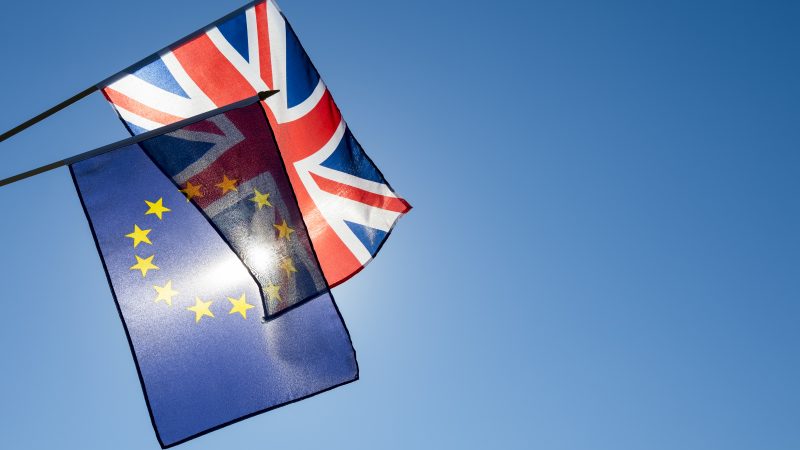

Among the issues facing Andy Burnham will be what to do about the “reset” with the EU started by the Starmer government.
This aimed, on its economic side, at attenuating the costs of Brexit. The hope was that, by aligning with EU single market standards and rules in various specific sectors, Britain could claw back lost exports, and reduce red tape, paperwork and border inspections that have hindered exports to what is, by far, our largest market. Starting with agriculture and energy, it was hoped to move on to other sectors such as chemicals and pharmaceuticals.
But this has proved to be slow and cumbersome, with no deal yet in place, even after two years, even for the two priority sectors. Rejoining the single market piecemeal isn’t working fast enough and won’t move the economic dial.
This is problematic. Brexit has turned out to be even more costly than initially estimated, with recent calculations showing that the UK economy may be up to eight per cent smaller than it would have been had we remained a member of the EU. Most of this loss arises from not being in the single market. The lost output also means that tax revenues have shrunk by around £90 billion every year, a sum that would have meant a very different debate on what we can afford to spend.
READ MORE: Labour and Brexit: the arguments that still divide the party a decade on
The economic damage of Brexit has not just been noticed by economists, businesses and politicians. It has also been noted by voters who can now see that Brexit bears no resemblance to what they were promised by the Leave campaign in 2016. They were told that Brexit would be easy, save lots of money (that would all go to the NHS), and keep Britain’s access to Europe while securing wonderful new trade deals across the planet. None of this was true. A significant number of Leave voters have, therefore, changed their view – especially if they work in a sector that has been particularly affected, or if they have been irritated by the multiple little things that Brexit has made more difficult, from ordering small packages abroad to joining the longer non-EU queue at border checkpoints if they travel.
With a slowly but steadily growing number of people – now over 60 percent of those expressing a view – saying Brexit was a mistake and even wanting to rejoin the EU, it is clear that there is room for more ambition on the part of the government.
Up to now, Labour has shied away from full participation in the single market, mainly because that would require accepting Freedom of Movement with the EU (and with Norway, Iceland and Switzerland). Given the toxic nature of the debate about migration in Britain, this set the alarm bells ringing – hence the caution of the 2024 manifesto.
Yet this need not be as big an obstacle as many people think. Especially now.
Most migration to Britain is from outside the EU and is therefore almost entirely a matter for national, not EU, rules. To the extent that it is affected by EU rules, it is on two useful aspects that we have lost with Brexit. The first is that the UK lost access to shared police databases of criminal records, wanted suspects, fingerprints, etc that enabled easier checks on anyone seeking to enter the UK. The second was the right, under the EU’s “Dublin” regulations, to return asylum seekers to the first EU country they entered to be evaluated there. It is no coincidence that the small boat phenomenon arose after we left the EU.
Become a friend of LabourList and join our community. Our friends support our vital non-factional work and get access to exclusive content and events.
Migration to Britain from inside the EU, is numerically much smaller and is less problematic, especially now, for three reasons.
First, the EU’s internal Freedom of Movement is not an unconditional right: those availing of it have to find employment or be self-sufficient. Britain failed to apply those conditions, but it could in the future. Indeed, it would be advantageous to describe it as “Conditional Freedom of Movement” – for that is what it is. For much of the public, that more accurate description would be reassuring.
Second, the likelihood of large numbers coming to Britain from EU countries is now smaller anyway, due to the increased standard of living in countries like Poland. And EU citizens moving to the UK are (and were) more likely to return to their own country after a few years (which many of them did) than are those coming from further afield, with fewer of them bringing their families with them.
Third, the EU’s internal Freedom of Movement is a reciprocal right, and over a million Brits worked, studied or retired lived in other EU countries, something that is now much more difficult and is missed by many.
Economically (not to mention geo-strategically with a militarily aggressive Putin to the east and an unreliable and dangerous Trump to the west making it more obvious by the day that the interests and values of European countries, including Britain, converge), we need a more ambitious and faster re-set with the EU.
The EU’s conditional internal freedom of movement should not be a reason to hold us back from rejoining the single market, or even contemplating a return to the EU.
Subscribe here to our daily newsletter roundup of Labour news, analysis and comment– and follow us on TikTok, Bluesky, WhatsApp, X and Facebook. You can also write to our editor to share your thoughts on our stories and share your own. The best letters are published every Sunday.
-
- SHARE: If you have anything to share that we should be looking into or publishing about this story – or any other topic involving Labour– contact us (strictly anonymously if you wish) at [email protected].
- SUBSCRIBE: Sign up to LabourList’s morning email here for the best briefing on everything Labour, every weekday morning.
- BECOME A FRIEND: If you enjoyed this, why not consider becoming a Friend of LabourList? Help sustain our journalism, and of course Friends do get benefits…
- PARTNER: If you or your organisation might be interested in partnering with us on sponsored events or projects, email [email protected].
- ADVERTISE: If your organisation would like to advertise or run sponsored pieces on LabourList‘s daily newsletter or website, contact our exclusive ad partners Total Politics at [email protected].



More from LabourList
Delivering in local government: How Labour is building a better Britain everywhere
‘Changing our voting system is fundamental to Burnham’s agenda’
‘Labour has a chance to make the socio-economic duty mean something’