

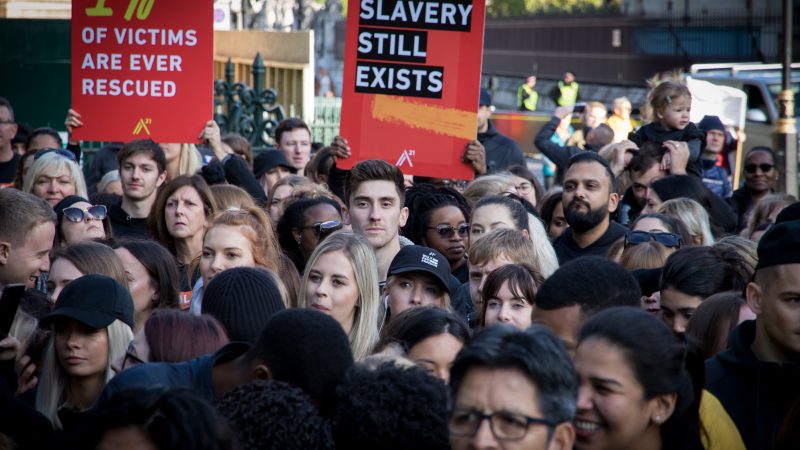

In 2015, the UK Modern Slavery Act (MSA), was world leading. Yet all it actually required of companies was to report on steps taken to address slavery. Just writing ‘None’ in a report was effective compliance. Worse, there was no enforcement and by 2021 it was estimated that fully 40% of companies in scope didn’t write anything at all.
We’ve since learned so much more. The supply chains on which we all depend have far more problems than slavery alone: unsafe working conditions, sexual harassment and violence, and the impact of rising temperatures on workers, to name just a few.
A decade on, the evidence is doubly damning: not only have transparency requirements proven toothless, but the full spectrum of harms to workers, communities and the environment persist stubbornly and at scale. This isn’t just a social justice failure. It’s a burden on responsible businesses and on the taxpayers who pick up the bill when others cut corners.
For all the government’s talk of growth, resilience, and a fair deal for working people, the King’s Speech stopped short of the one measure that would turn those commitments into reality.
READ MORE: ‘There are good and bad businesses. Labour needs to be able to explain the difference’
It is incoherent to pursue a fair deal for UK workers while ignoring the conditions in the supply chains that serve them.
Meanwhile the rest of the world is taking strides. France, Germany, the Netherlands, Norway and the EU have all introduced mandatory due diligence frameworks. Beyond Europe, Indonesia is on a fast-track legislative pathway; South Korea has two competing bills before its National Assembly; Australia, New Zealand, Thailand, Malaysia and Cambodia are all at various stages of development.
This is not a niche regulatory trend. It is a global shift in what responsible business means, and what trading partners will expect. And Britain is increasingly exposed. The UK imports £20 billion of high-risk goods every year. The more that our competitors ban certain goods – as both the US and EU are doing with forced labour bans – the more likely those goods will come to UK shores as they seek buyers. The US has named us among 60 economies under investigation for insufficient enforcement on forced labour. This is not a reputational footnote. It is a trade and diplomatic vulnerability.
Some will frame mandatory human rights and environmental due diligence obligations (mHREDD) as a burden on business. But investors, consumers and businesses themselves disagree.
ETI, the British Retail Consortium, the Trades Union Congress and the Corporate Justice Coalition are united in calling for legislation. Together we represent businesses generating £800 billion in turnover, trade unions with 160 million members worldwide and over 100 civil society organisations spanning human rights, labour rights and the environment. This is not civil society asking business to act. It is businesses, unions and civil society asking the government to lead.
Become a friend of LabourList and join our community. Our friends support our vital non-factional work and get access to exclusive content and events.
Investors representing over £4.5 trillion in UK assets are already demanding mandatory standards. And 80% of UK consumers say they would support a UK mHREDD law.
Businesses already sourcing responsibly are being undercut by those who ignore abuse. mHREDD would end that imbalance, and it is precisely the kind of market-shaping intervention this government says it believes in. Research suggests prioritising social and environmental factors could grow the economy by as much as 7%, equivalent to £149 billion. Companies that consistently manage responsible business conduct outperform their FTSE 350 peers. mHREDD is not a barrier to growth. It is one of its drivers.
Independent academic research, multiple parliamentary committees and the UN Committee on Economic, Social and Cultural Rights (CESCR) have all reached the same conclusion: disclosure without enforcement is not enough. The CESCR has urged the UK to establish a mHREDD framework as a matter of priority. A single, coherent framework aligned with international standards including the UN Guiding Principles and OECD Guidelines, would provide the legal clarity businesses need to plan and invest at scale.
mHREDD means companies must identify, prevent and address human rights and environmental harms across their supply chains. Not merely report on them. Where they fail to do so, those harmed must have access to justice and remedy. Critically, this must involve meaningful engagement with the workers, communities and others affected. It is a wider lens than the Modern Slavery Act, and deliberately so. The challenges facing workers, communities and the environment are interconnected; you cannot address one in isolation. Other countries have shown it can be done. Britain should follow.
Subscribe here to our daily newsletter roundup of Labour news, analysis and comment– and follow us on TikTok, Bluesky, WhatsApp, X and Facebook. You can also write to our editor to share your thoughts on our stories and share your own. The best letters are published every Sunday.
This Labour Government came to power promising to make work pay and restore Britain’s place in the world. The King’s Speech was the moment to show it meant it. The Responsible Business Conduct Review is the chance to deliver. This is a policy that delivers for working people, strengthens trade credibility and advances environmental responsibility. The coalition is already assembled. The political will is all that’s required. Ministers, MPs, don’t waste it.
-
- SHARE: If you have anything to share that we should be looking into or publishing about this story – or any other topic involving Labour– contact us (strictly anonymously if you wish) at [email protected].
- SUBSCRIBE: Sign up to LabourList’s morning email here for the best briefing on everything Labour, every weekday morning.
- BECOME A FRIEND: If you enjoyed this, why not consider becoming a Friend of LabourList? Help sustain our journalism, and of course Friends do get benefits…
- PARTNER: If you or your organisation might be interested in partnering with us on sponsored events or projects, email [email protected].
- ADVERTISE: If your organisation would like to advertise or run sponsored pieces on LabourList‘s daily newsletter or website, contact our exclusive ad partners Total Politics at [email protected].



More from LabourList
‘Playing it safe on Europe is the riskiest thing Labour can do’
‘Jack Charlton and Labour’s rural tradition’
Labour triumphs against Polanski, but the Green threat remains