

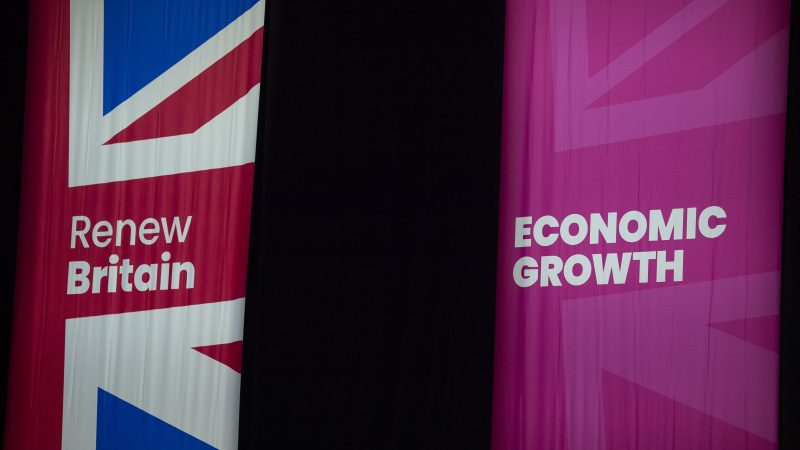

At a time when Britain faces sluggish growth, stretched public finances, and mounting pressure on frontline services, Labour must now make long-term economic growth the central mission of government.
Not growth for its own sake, nor growth that benefits only those at the top, but broad-based national growth capable of improving living standards, rebuilding public services, restoring fiscal credibility, and creating long-term economic security for working people. Because ultimately, Britain cannot sustainably fund world-class public services on stagnant economic growth.
For too long, political debate has often treated economic growth and social justice as separate conversations. In reality, they are deeply connected. Without growth, governments become trapped in a cycle of rising taxation, weak productivity, constrained public spending, and increasing borrowing pressure.
Labour should reject both short-termism and managed decline.
READ MORE: ‘Delivering for the country must come before internal party politics’
Instead, the party should champion a modern economic strategy built around infrastructure investment, productivity, skills, industrial renewal, energy resilience, and long-term capital investment into the British economy.
A serious growth strategy also requires the government to think far more long-term about how Britain attracts investment and delivers major projects. For too long, the UK has too often combined short-term policymaking with slow infrastructure delivery, planning delays, regulatory uncertainty, and weak productivity growth. Labour has an opportunity to change that by creating a more stable environment for long-term investment, modernising infrastructure delivery, strengthening skills and technical education, and supporting industries capable of driving future economic growth.
That includes advanced manufacturing, life sciences, artificial intelligence, financial services, and modern digital infrastructure – sectors where Britain already possesses significant competitive advantages. It also means ensuring growth is felt beyond London and the South East, through greater investment into regional infrastructure, clean energy, advanced manufacturing, and skilled jobs in communities that have too often been left behind.
Having grown up in Pendle in East Lancashire during the Thatcher years, I saw first-hand how communities impacted by industrial decline and long-term underinvestment can still struggle decades later.
Growth will not come from slogans alone. It requires long-term planning, economic stability, and the confidence for businesses and investors to commit capital to Britain for the future.
This also means being far more ambitious about mobilising domestic pension capital for productive national investment.
The UK possesses some of the largest pools of pension capital in the world, yet historically we have often failed to channel sufficient long-term investment into infrastructure, housing, transport, clean energy, and modern public assets.
There is no reason why British pension capital cannot play a greater role in helping finance national renewal – including modern NHS infrastructure such as hospitals, diagnostic centres, and healthcare innovation hubs.
Done properly, this creates a powerful alignment of interests. Any such investments must, of course, be structured responsibly to protect pension members’ interests and deliver strong long-term inflation-linked returns.
Become a friend of LabourList and join our community. Our friends support our vital non-factional work and get access to exclusive content and events.
Pension funds gain access to long-term investment opportunities suited to their liabilities, whilst the wider public benefits from stronger infrastructure, higher productivity, job creation, and improved public services.
In effect, wealth generated by British workers can be invested back into Britain itself.
Having worked in international banking and pension fund governance, I believe Britain can also learn from countries such as Singapore, where domestic capital is more actively encouraged to support long-term national development priorities and infrastructure investment.
Britain’s circumstances are obviously different, but the principle of long-term economic planning remains highly relevant.
This approach also aligns naturally with Labour values.
A stronger economy should not simply produce higher GDP figures. It should create secure jobs, support working families, strengthen communities, improve public services, and give people genuine economic security. That means combining fiscal responsibility with long-term investment, workers’ rights, skills development, modern industrial strategy, and public sector reform.
Crucially, it also means recognising that fiscal credibility matters.
Every increase in government borrowing costs is ultimately money diverted away from public services, local government, policing, infrastructure, and the NHS. Economic credibility is not a technocratic obsession. It is fundamental to Labour’s ability to deliver its wider social mission sustainably over the long term.
Subscribe here to our daily newsletter roundup of Labour news, analysis and comment– and follow us on TikTok, Bluesky, WhatsApp, X and Facebook. You can also write to our editor to share your thoughts on our stories and share your own. The best letters are published every Sunday.
The next phase of Labour politics should therefore not be defined by internal factionalism or short-term tactical debates. It should be defined by whether Labour can build a more productive, competitive, investment-driven economy capable of delivering rising living standards and long-term national renewal.
Because without growth, everything else becomes harder.
-
- SHARE: If you have anything to share that we should be looking into or publishing about this story – or any other topic involving Labour– contact us (strictly anonymously if you wish) at [email protected].
- SUBSCRIBE: Sign up to LabourList’s morning email here for the best briefing on everything Labour, every weekday morning.
- BECOME A FRIEND: If you enjoyed this, why not consider becoming a Friend of LabourList? Help sustain our journalism, and of course Friends do get benefits…
- PARTNER: If you or your organisation might be interested in partnering with us on sponsored events or projects, email [email protected].
- ADVERTISE: If your organisation would like to advertise or run sponsored pieces on LabourList‘s daily newsletter or website, contact our exclusive ad partners Total Politics at [email protected].



More from LabourList
‘Fix the visible things, and the mandate will write itself’
Stella Tsantekidou column: ‘Nice guys finish first’
Voters want electoral reform, but split on what system to switch to – poll finds