


There’s no shortage of Labour WhatsApp groups in Westminster, from the party’s many tribes to the class of ‘24. And there’s no shortage of journalists prying about who said what, and who’s in what club.
So it’s surprising there’s been little reporting to date on one of Labour’s fastest-growing groups. Its members span the offices of almost half the Parliamentary Labour Party, and it’s all-but-certain to include some of the party’s future leading lights.
The Labour Progressive Policy Network recently notched up its 200th member, despite only launching in November.
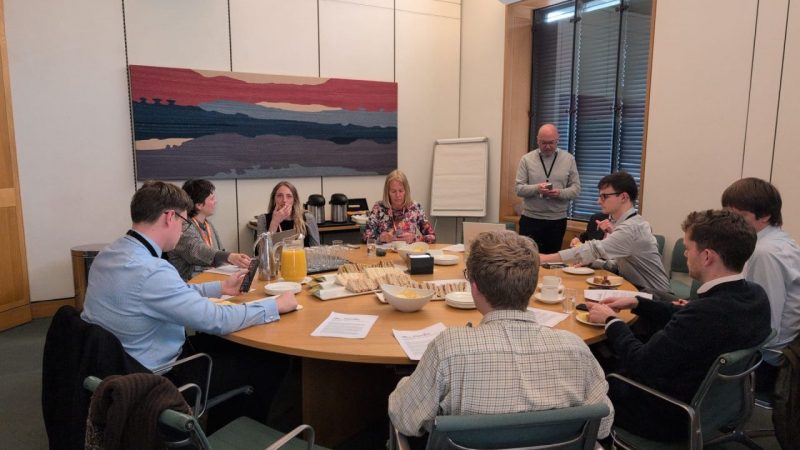
Its purpose isn’t plotting coups or rebellions, though. It’s to organise monthly policy discussions with experts, aimed not at MPs but at their staff – the unsung heroes quietly powering much of politicians’ everyday work.
Membership is open to Labour MPs’ parliamentary and constituency staff, with topical policy events held in the evenings or lunch-breaks.
Why shouldn’t staff have the debates MPs do?
It’s based on a quietly radical idea – one that like many good ideas feels obvious the minute you hear it.
We’ve all been at policy events where MPs can only stay for 15 minutes, quietly slipping out as ashen-faced advisers gesticulate frantically they’re already late for the next engagement.
Co-founder Cassie Rist tells me she was at one such event when the idea hit her.
“I thought – it’s the staffers you can grab the attention of for longer. They sit and discuss these things day in, day out with their bosses. Is there a way we can bring the wider progressive ecosystem to them, so they can support their bosses in a more effective way?”
Helping organise policy discussions between MPs and experts also made her think – “the staffers should have that for themselves as well”.
Rist and co-founder Maisie Caro have only been in parliament a few years. When they first started, both were surprised to find less staff discussion of the big policy issues of the day than they expected. While they felt privileged to be working “at the heart of democracy” and alongside great minds, they also found it surprisingly difficult to meet people, Caro explains.
Some staff find starting out an “isolating experience,” particularly if they’re the only new recruit and MPs are often out in the chamber or elsewhere. Constituency staff must feel it especially acutely.
“We wanted to do something to support staff with that isolation, feeling more confident, discussing our ideas and creating a healthy political culture.”
Attendees come from as far as Newcastle
The pair’s instinct was clearly right. Staffers have travelled from as far as Newcastle and Bristol for the events they’ve organised since. Some 45 members showed up for as niche a topic as ‘banking indemnity and tiered reserves’ (me neither).
The group started out with an economic policy focus, initially branding it the Labour Staffers Economy Network.
Events have included ‘Wealth Taxes Won’t Work, Will They?’ debating re-nationalising water and taxing polluters, a year-ahead economic outlook and an upcoming session with inequality campaigner Gary Stephenson. Many other speakers have been leading voices too, from the Resolution Foundation, IPPR, Common Wealth, Compass, Verdant, Tax Justice UK, Global Witness and many more.
Their own enthusiasm is clear, over and above the fact their work’s all unpaid and in their spare time.
‘Would a man really doubt their ability?’
For Caro, economics is “the foundation everything springs from”, with two decades of stagnant real incomes explaining “huge, deep-seated unhappiness” with politics.
Both studied some economics at university, with Rist then working in climate policy in government and the third sector and Caro working at the Living Wage Foundation before they went into parliament. Caro works for Torsten Bell, and Rist for Miatta Fahnbulleh. It’s no coincidence one of those helped write the last Budget, and the other’s arguably now helping write the next Budget.
Rist puts her interest down to long discussions growing up with her dad, an investment banker with the odd more radical economic view. She credits her mum, a former Time Out political editor, and him with her confidence too: “I’m quite lucky I’m from a family with a ‘why wouldn’t you be the one to set up the network’ attitude. ‘Why would you not do that? Why wouldn’t people want to listen to what I have to say?”
By contrast Caro describes visiting London as an A-Level politics student, seeing Parliament and thinking she’d love to work there – but it’s “a dream that’s out of reach”.
She says she still sometimes lacks confidence on certain topics, but wonders: “Would a man really doubt their ability to do X, Y or Z?”
She stresses it’s not always that black and white, but both are determined to get more women in particular involved in policy discussions.
Become a friend of LabourList and join our community. Our friends support our vital non-factional work and get access to exclusive content and events.
“There were lots of women who initially wouldn’t come as they said they didn’t know anything about economics, or they don’t have a Master’s; it’ll be embarrassing,” Caro adds. “And these are incredibly clever people, holding the pen on the first draft of op-eds or essays.”
They encourage debate, too, with as much time often dedicated to floor discussion as for speakers’ speeches. “There’s nothing worse than organising something where everyone aggressively agrees,” Rist says.
Their approach seems to be working, with more women now asking questions at events. The pair explicitly encourage women to speak whenever two questions in a row come from men. Others have said having two women leading it encouraged them to get involved.
Training Labour’s collective brain
The network’s longer-term impact – boosting the confidence many staff have in their ideas and their voice – could be far less tangible but far more profound. If the group keeps going strong throughout this parliament and beyond, its events could nurture not just the careers of many of the next generation of senior Labour figures, but the future capacity of Labour itself to deal with Britain’s economic challenges, constraints, orthodoxies and elites. Few MPs and senior political advisers have time to school themselves in all aspects of policy while in office, making prior learning vital for any staffers headed in that direction.
The network’s events have now widened beyond the economy, explaining its recent rebrand. The organisers factor in what members are interested in, what’s topical – with events planned on welfare and North Sea drilling – and what can help staff see “past the spin” right-wing media put on economic policy debates, as Caro puts it. The pair meet each week straight after PMQs, when there’s usually a brief lull in workloads.
They hope to secure some funding in future, enabling them to host events in better rooms, and one at conference. “Our events are really great, but they’re a little bit cobbled together on the fly.”
If cobbling things together on the fly can get 182 MPs’ staff into a WhatsApp group in well under a year – far more than most MPs’ own groups have mustered in nearly two years – then it begs the question what further development and professionalisation will achieve.
It’s probably against the network’s rules, but if any Labour bigwigs did want to launch a coup in the near-future, they might be better off infiltrating this group than the more tribal, leaky groups of the old guard. A tip to Andy, Wes et al – just make sure that when you plant supportive messages in the chat from eager supporters, you don’t have three in a row from men.
Subscribe here to our daily newsletter roundup of Labour news, analysis and comment– and follow us on TikTok, Bluesky, WhatsApp, X and Facebook. You can also write to our editor to share your thoughts on our stories and share your own. The best letters are published every Sunday.
-
- SHARE: If you have anything to share that we should be looking into or publishing about this story – or any other topic involving Labour– contact us (strictly anonymously if you wish) at [email protected].
- SUBSCRIBE: Sign up to LabourList’s morning email here for the best briefing on everything Labour, every weekday morning.
- BECOME A FRIEND: If you enjoyed this, why not consider becoming a Friend of LabourList? Help sustain our journalism, and of course Friends do get benefits…
- PARTNER: If you or your organisation might be interested in partnering with us on sponsored events or projects, email [email protected].
- ADVERTISE: If your organisation would like to advertise or run sponsored pieces on LabourList‘s daily newsletter or website, contact our exclusive ad partners Total Politics at [email protected].



More from LabourList
‘Football doesn’t care about the Oxbridge tech corridor’
‘A new politics needs more than a new voting system’
Good growth in every postcode 7th October 2026