

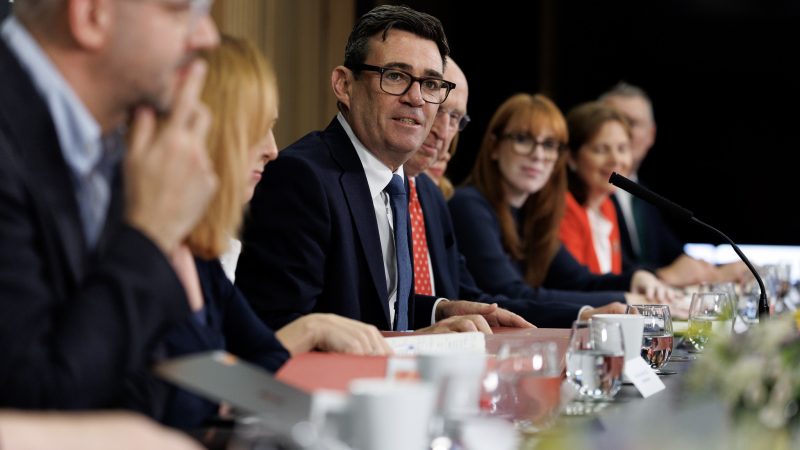

Burnham’s bold plan to give mayors in England a share of income tax and business rates is transformational – and amounts to the biggest transfer of power and of funding from SW1 in a generation.
The Prime Minister’s vision has been centred on devolving power out of Westminster and delivering it to local communities, and yesterday’s announcement delivers on that promise. From next spring, mayors across England will be able to retain more of the revenue generated in their region – translating into improved public services, better local transport, and crucially good growth in every postcode.
The plan comes with more than just money; local leaders will be handed greater control over housing, transport, skills, employment support and public services – with ministers now having to justify why powers should stay in Whitehall, rather than being devolved. When announcing the plan yesterday, Burnham said: “I know what it’s like to be ignored by politicians in Westminster. I’m not going to make that same mistake now I’m PM.”
What makes this huge moment in devolution all the more radical is its sheer speed – with the announcement coming less than a fortnight since Burnham became Prime Minister. Having spent almost a decade arguing from Manchester that power should flow out from Westminster, Burnham is now putting that philosophy into practice from Downing Street.
Become a friend of LabourList and join our community. Our friends support our vital non-factional work and get access to exclusive content and events.
Of course, the wait goes on for many parts of the country for their own metro mayor. Large parts of England, including in Lancashire, Cornwall, Leicestershire and where I live in Sussex, are either waiting for postponed elections in 2028 or have no clear route yet into this new settlement.
The real test now is whether Burnham can ensure this revolution reaches every corner of England, while extending the benefits of metro mayors to communities across the rest of the UK too. Devolution cannot continue to be a two-tier system, where some communities reap rewards from unprecedented freedoms while others remain dependent on Whitehall.
If, by the next election, every community has the same opportunity to shape its own future as Greater Manchester does today, Labour won’t have just delivered on its promise of ‘change’, it will have permanently redrawn the relationship between Westminster and the rest of the country.
Subscribe here to our daily newsletter roundup of Labour news, analysis and comment– and follow us on TikTok, Bluesky, WhatsApp, X and Facebook. You can also write to our editor to share your thoughts on our stories and share your own. The best letters are published every Sunday.
-
- SHARE: If you have anything to share that we should be looking into or publishing about this story – or any other topic involving Labour– contact us (strictly anonymously if you wish) at [email protected].
- SUBSCRIBE: Sign up to LabourList’s morning email here for the best briefing on everything Labour, every weekday morning.
- BECOME A FRIEND: If you enjoyed this, why not consider becoming a Friend of LabourList? Help sustain our journalism, and of course Friends do get benefits…
- PARTNER: If you or your organisation might be interested in partnering with us on sponsored events or projects, email [email protected].
- ADVERTISE: If your organisation would like to advertise or run sponsored pieces on LabourList‘s daily newsletter or website, contact our exclusive ad partners Total Politics at [email protected].



More from LabourList
Rotten to the core? Reform demonstrate why party discipline is important
Paul Nowak column: ‘Britain needs a living standards Budget’
‘Brexit was never a closed matter – it’s time to put the national interest first’