


Andy Burnham entered Downing Street with something few incoming Prime Ministers enjoy: goodwill.
For years, he has occupied a unique place in British politics. To many, he is the politician who stood with the Hillsborough families when others did not, challenged Westminster orthodoxy from Manchester, and spoke up for communities who felt ignored. He has often seemed more willing than many national politicians to talk about fairness, justice and accountability.
That goodwill comes with expectations.
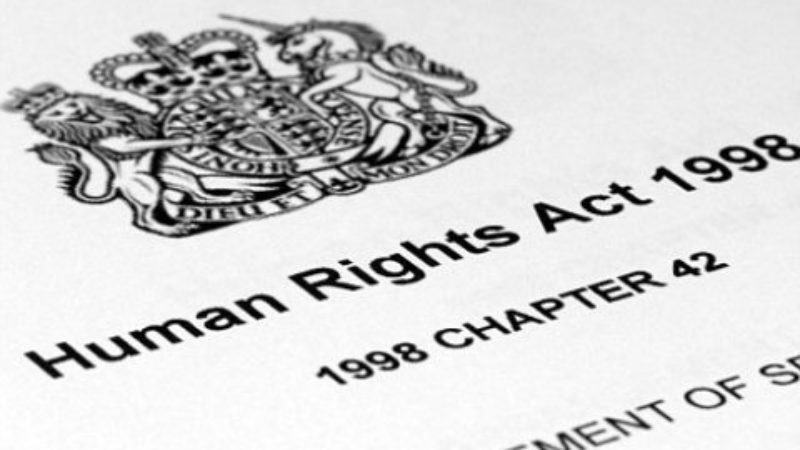
New polling commissioned by Amnesty International suggests Labour voters want Burnham to go further on human rights than recent governments and see human rights not as a political distraction, but as a core test of leadership.
At a time when human rights are often portrayed as politically difficult, the findings tell a different story.
READ MORE: ‘Burnham must treat soft power as part of Britain’s defence’
More than four in five people say it is important that the next Prime Minister does more to protect human rights. Among Labour voters, support is even stronger.
Perhaps most strikingly, 92% of Labour voters say it is important that government decisions do not leave more people unable to afford food, with seven in ten saying this is very important.
That should be a wake-up call.
For too long, debates about human rights have been caricatured as arguments about courts, lawyers and international treaties. Those things matter. But for most people, human rights begin much closer to home. They are about whether families can afford food, whether people have somewhere secure to live and whether the government treats people fairly.
Our polling found that tackling poverty and the cost-of-living crisis is the human rights issue voters most want the next Prime Minister to prioritise, followed by ensuring everyone has access to affordable food and housing.
Labour members and voters are not asking for less ambition on rights. They are asking for more.
The same is true internationally.
Burnham has already acknowledged that Labour got it wrong on Gaza. That admission matters. Now voters will want to see what that means in practice: there will have to be concrete action to match the change in tone.
Our polling found significantly more support for stronger UK action over Gaza and the Occupied Palestinian Territory than opposition to it. That should not surprise Labour members. Many have spent the last two years pressing for a stronger response to what Amnesty International believe to be genocide and ethnic cleansing unfolding before the world’s eyes.
The lesson is not simply about Gaza. It is about whether Labour is prepared to demonstrate that human rights and international law are principles to be upheld consistently, not only when convenient.
The polling also suggests Labour voters remain concerned about the health of Britain’s democracy. Significant numbers expressed concern about politicians restricting peaceful protest and dissent, following years in which campaigners have warned about the erosion of protest rights and the increasing criminalisation of peaceful activism.
From the mass arrest of peaceful demonstrators to the controversial proscription of Palestine Action, many Labour supporters are asking whether a Burnham government will continue down that path or renew Labour’s historic commitment to civil liberties and democratic freedoms.
There is a wider political lesson here too.
Nearly half of voters said they were concerned by politicians pitting communities against one another for political gain, while similar numbers expressed concern about racist or discriminatory rhetoric in public life.
At a time when politics is increasingly shaped by division and scapegoating, Labour voters appear hungry for something different: leaders who challenge injustice without exploiting fear, who bring communities together rather than setting them against one another, and who place fairness ahead of culture wars.
For Burnham, this presents an opportunity.
Become a friend of LabourList and join our community. Our friends support our vital non-factional work and get access to exclusive content and events.
The conventional wisdom in Westminster has long been that human rights are politically risky. The evidence increasingly suggests the opposite. People care deeply about fairness, dignity and accountability. They care about whether government decisions leave people better off or worse off. These are not separate from human rights; they are human rights.
Burnham also entered office carrying something else: great expectations.
Not simply because of who he is, but because of what many Labour members felt was missing in recent years; the willingness to act on values when doing so is politically difficult.
The response to Israel’s violations is perhaps the clearest example. Burnham has already acknowledged that his predecessor got it wrong. The question now is whether that recognition is followed by course-correcting action.
Fittingly in Great Expectations, Dickens’s Pip reflects that he had been “too cowardly to do what I knew to be right”. Many Labour members could argue that, on issues ranging from Gaza to protest rights, that is precisely the trap progressive governments have fallen into.
The public expectation is there. Labour voters are sending a clear message that they want a stronger commitment to rights, fairness and justice than they have seen in recent years.
The question now is whether the new Prime Minister is prepared to meet it.
Subscribe here to our daily newsletter roundup of Labour news, analysis and comment– and follow us on TikTok, Bluesky, WhatsApp, X and Facebook. You can also write to our editor to share your thoughts on our stories and share your own. The best letters are published every Sunday.
-
- SHARE: If you have anything to share that we should be looking into or publishing about this story – or any other topic involving Labour– contact us (strictly anonymously if you wish) at [email protected].
- SUBSCRIBE: Sign up to LabourList’s morning email here for the best briefing on everything Labour, every weekday morning.
- BECOME A FRIEND: If you enjoyed this, why not consider becoming a Friend of LabourList? Help sustain our journalism, and of course Friends do get benefits…
- PARTNER: If you or your organisation might be interested in partnering with us on sponsored events or projects, email [email protected].
- ADVERTISE: If your organisation would like to advertise or run sponsored pieces on LabourList‘s daily newsletter or website, contact our exclusive ad partners Total Politics at [email protected].



More from LabourList
The art of the political apology
Delivering in Government: your weekly round up of good news Labour stories
‘The Budget must not leave renters out in the cold’