


What is the point of Labour? It’s a question many voters have been asking somewhat rhetorically in the last two years.
But the new government’s first week of policy announcements is bolder and seems rooted in Labour’s historical purpose: protecting the vulnerable.
And yet like other parties, Labour may be making a mistake that is hidden from view. When we ask: “who is vulnerable and deserves Labour’s protection?” our gaze should not be locked onto one type of being. The other animals are also vulnerable and also merit Labour’s protection.
Some may say that there are other priorities. That Labour is for people, that resources are too limited. The concern is a fair one. But animals call out for our attention, because they vastly outnumber humans, are more ethically important than we tend to think, and are inexpensive to help.
READ MORE: ‘An opportunity to accelerate humane science’
In raw numbers, far more animals are abused than humans. Take chickens. In the UK, we kill 45 million male chicks every year on the first day of their lives, according to UK government figures. This is avoidable. But they can’t lay eggs, so it’s considered more convenient to kill them.
85 percent of British farmed animals are factory farmed: permanently locked in cages, indoor pens or industrial hangars in their thousands. Is this necessary? If not, it’s urgent: the numbers are astronomical. In 2022, Britain raised and killed at least 1.1 billion chickens (counting broiler chickens only).
Many large corporations have vested interests in the continuation of such practices. And yet Labour has a long tradition of taking on vested interests. If Labour’s purpose is to protect the vulnerable, this mission can’t crumple when certain economic interests oppose change.
Animals matter. Their vulnerabilities should move us. If there’s one thing academics agree on in my field of animal ethics, it’s that there is no golden line that separates all humans from the rest of animalkind.
We might say that beings who are smarter simply matter far more. But such hierarchies conflict with Labour’s spirit of inclusion. We are all animals: animals who live, who feel, who are vulnerable. We all have a window onto this world.
How we act on animals in policy terms is an open question. But bearing down on factory farming can work in tandem with a renewed focus on the cost of living. The first steps of such a programme are eminently realistic. They are low cost, low-hanging fruit.
As a first simple step, the new government should take forward the previous Labour administration’s promise to ban “colony cages” for all chickens. Unpopular with the public, these lifelong cages for groups of animals are little better than the long-banned individual cages they replaced.
Become a friend of LabourList and join our community. Our friends support our vital non-factional work and get access to exclusive content and events.
Second, the new government should go further on “hatch-and-dispatch”. Rather than merely ‘encourage’ industry to stop disposing of day-old chicks, as in the last administration’s strategy, we should follow Germany, France, Italy and Austria in simply banning it, deploying in-ovo sexing technology that’s been around for years.
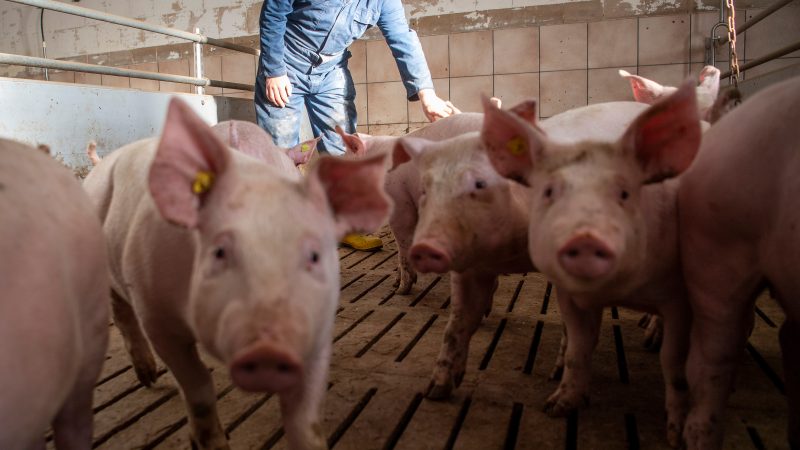
Third, the government should urgently bring forward the ban on the CO2 gassing of pigs that Starmer’s government planned to eventually enact. People are horrified when they find out that 90 percent of Britain’s pigs are killed in this panic-inducing manner.
These measures might prove costless to the consumer. Any small effect that reaches shoppers could be more than outweighed by subsidising British veg, in a boost to the NHS. And the public strongly rejects such farming practices in a striking consensus, and wants them to end.
These immediate first steps should be followed by moves to reorient British farming and innovation towards two sets of proteins: climate-friendly pulses like fava beans and lentils, and cultivated meat grown using only animal cells, not animals. We need clever kinds of protein to gain food security and honour our climate obligations.
Industrial animal agriculture can’t ever promote food security given its inherent waste: animals need far more food to be pumped in than we’ll ever get in return. Governments should not fear action on food but the consequences of inaction. Polls repeatedly say voters want government to lead on food policy. We have an opportunity to become leaders in the future of alternative proteins; to be ahead of the curve in a changing world.
Subscribe here to our daily newsletter roundup of Labour news, analysis and comment– and follow us on TikTok, Bluesky, WhatsApp, X and Facebook. You can also write to our editor to share your thoughts on our stories and share your own. The best letters are published every Sunday.
A truly progressive politics ends abuses. A truly progressive politics is open to rethinking the status quo on who counts as important, vulnerable and in need of protection. The Labour Party can – and should – start a broader conversation about the place of the other animals in an inclusive politics, and animals’ place in the policy pecking list.
As Labour begins that conversation, it can take immediate steps on hatch-and-dispatch, colony cages, and CO2 gassing: flagrant cases of needless suffering. Labour can seize this chance to stand up for the vulnerable in their hundreds of millions.
-
- SHARE: If you have anything to share that we should be looking into or publishing about this story – or any other topic involving Labour– contact us (strictly anonymously if you wish) at [email protected].
- SUBSCRIBE: Sign up to LabourList’s morning email here for the best briefing on everything Labour, every weekday morning.
- BECOME A FRIEND: If you enjoyed this, why not consider becoming a Friend of LabourList? Help sustain our journalism, and of course Friends do get benefits…
- PARTNER: If you or your organisation might be interested in partnering with us on sponsored events or projects, email [email protected].
- ADVERTISE: If your organisation would like to advertise or run sponsored pieces on LabourList‘s daily newsletter or website, contact our exclusive ad partners Total Politics at [email protected].



More from LabourList
Labour MP Perran Moon suspended over Covid loan allegations
‘From Hillsborough to the Troubles: Labour must deliver truth and accountability for every family’
Delivering in local government: How Labour is building a better Britain everywhere